Other Sites:




Bibliography Options Menu


Robert J. Robbins is a biologist, an educator, a science administrator, a publisher, an information technologist, and an IT leader and manager who specializes in advancing biomedical knowledge and supporting education through the application of information technology. More About: RJR | OUR TEAM | OUR SERVICES | THIS WEBSITE
RJR: Recommended Bibliography 19 Oct 2026 at 02:00 Created:
Urolithiasis
Some mineral solutes precipitate to form crystals
in urine; these crystals may aggregate and grow to macroscopic
size, at which time they are known as uroliths (calculi or
stones). Mechanisms involved in stone formation are
incompletely understood in dogs and cats. Regardless of the
underlying mechanism(s), uroliths are not produced unless
sufficiently high urine concentrations of urolith-forming
constituents exist and transit time of crystals within the
urinary tract is prolonged. Clinical signs associated with
urolithiasis are seldom caused by microscopic crystals. However,
formation of macroscopic uroliths in the lower urinary tract
that interfere with the flow of urine and/or irritate the
mucosal surface often results in dysuria, hematuria, and
stranguria. Urethral obstruction is common in male dogs and
cats. It may occur suddenly or may develop throughout days or
weeks. Initially, the animal may frequently attempt to urinate
and produce only a fine stream, a few drops, or nothing. Animals
may also exhibit extreme pain manifested by crying out when
attempting to urinate. Complete obstruction causes uremia within
36–48 hr, which leads to depression, anorexia, vomiting, diarrhea,
dehydration, coma, and death within ~72 hr.
NOTE:
Urethral obstruction is an emergency condition, and treatment
should begin immediately.
Created with PubMed® Query: ( (canine OR feline) AND (urolithiasis) ) NOT pmcbook NOT ispreviousversion
Citations The Papers (from PubMed®)
RevDate: 2026-10-04
CmpDate: 2026-10-04
Intraoperative needlescopy facilitates complete urolith removal during open cystotomy in dogs and cats: 19 cases.
The Journal of small animal practice, 67(10):1008-1015.
OBJECTIVES: To describe the feasibility of intraoperative needlescopy during open cystotomy for retrieval of bladder and urethral uroliths in dogs and cats.
STUDY DESIGN: Observational retrospective study.
MATERIALS AND METHODS: Dogs and cats undergoing open cystotomy for retrieval of uroliths followed by needlescopy between November 2023 and September 2025. Clinical data including signalment, preoperative imaging, urolith analysis, estimated urethral length, complications, and outcomes were recorded.
RESULTS: A total of 17 dogs and two cats met the inclusion criteria (age 1 to 11 years, weight 2.5 to 54.5 kg). Sixteen dogs and one cat were male, and French bulldogs (5/12) were overrepresented. All cases had open cystotomy followed by intraoperative needlescopy using a 125 x 1.9 mm needle scope. Estimated urethral length on preoperative radiographic imaging ranged from 90 to 470 mm (median 240 mm).The needle scope allowed complete (100%) visualisation of the urethra in three animals (the female dog, female cat and male cat). The estimated percentage of urethra visualised by the needle scope in male dogs was 65 to 85%. No intraoperative complications were reported. Postoperative radiographs were performed in 11 cases, with no residual uroliths identified. Soft tissue lesions (urethral stricture) were observed in two cases. Postoperative haematuria and pollakiuria were noted in four cases and were all self-limiting. One dog re-obstructed 18 days postoperatively and required revision surgery.
CLINICAL SIGNIFICANCE: Intraoperative needlescopy during open cystotomy is feasible and improves the visualisation of uroliths and urethral soft tissue injuries in dogs and cats. Needle scopes may be particularly advantageous in environments where other minimally invasive specialised equipment is unavailable or where personnel lack training in advanced endoscopic techniques, as it can enhance the surgeon's confidence in confirming the absence of residual stones within the urinary tract.
Additional Links: PMID-42186907
Publisher:
PubMed:
Citation:
show bibtex listing
hide bibtex listing
@article {pmid42186907,
year = {2026},
author = {Thibaud, J and Devereux, S and Cuddy, LC},
title = {Intraoperative needlescopy facilitates complete urolith removal during open cystotomy in dogs and cats: 19 cases.},
journal = {The Journal of small animal practice},
volume = {67},
number = {10},
pages = {1008-1015},
doi = {10.1111/jsap.70145},
pmid = {42186907},
issn = {1748-5827},
mesh = {Animals ; Cats ; Dogs ; Male ; *Cat Diseases/surgery ; Female ; *Cystotomy/veterinary/methods ; Retrospective Studies ; *Dog Diseases/surgery ; *Urolithiasis/surgery/veterinary ; },
abstract = {OBJECTIVES: To describe the feasibility of intraoperative needlescopy during open cystotomy for retrieval of bladder and urethral uroliths in dogs and cats.
STUDY DESIGN: Observational retrospective study.
MATERIALS AND METHODS: Dogs and cats undergoing open cystotomy for retrieval of uroliths followed by needlescopy between November 2023 and September 2025. Clinical data including signalment, preoperative imaging, urolith analysis, estimated urethral length, complications, and outcomes were recorded.
RESULTS: A total of 17 dogs and two cats met the inclusion criteria (age 1 to 11 years, weight 2.5 to 54.5 kg). Sixteen dogs and one cat were male, and French bulldogs (5/12) were overrepresented. All cases had open cystotomy followed by intraoperative needlescopy using a 125 x 1.9 mm needle scope. Estimated urethral length on preoperative radiographic imaging ranged from 90 to 470 mm (median 240 mm).The needle scope allowed complete (100%) visualisation of the urethra in three animals (the female dog, female cat and male cat). The estimated percentage of urethra visualised by the needle scope in male dogs was 65 to 85%. No intraoperative complications were reported. Postoperative radiographs were performed in 11 cases, with no residual uroliths identified. Soft tissue lesions (urethral stricture) were observed in two cases. Postoperative haematuria and pollakiuria were noted in four cases and were all self-limiting. One dog re-obstructed 18 days postoperatively and required revision surgery.
CLINICAL SIGNIFICANCE: Intraoperative needlescopy during open cystotomy is feasible and improves the visualisation of uroliths and urethral soft tissue injuries in dogs and cats. Needle scopes may be particularly advantageous in environments where other minimally invasive specialised equipment is unavailable or where personnel lack training in advanced endoscopic techniques, as it can enhance the surgeon's confidence in confirming the absence of residual stones within the urinary tract.},
}
MeSH Terms:
show MeSH Terms
hide MeSH Terms
Animals
Cats
Dogs
Male
*Cat Diseases/surgery
Female
*Cystotomy/veterinary/methods
Retrospective Studies
*Dog Diseases/surgery
*Urolithiasis/surgery/veterinary
RevDate: 2026-08-31
Retrospective analysis of 68 domestic ferrets with urethral obstruction shows high rate of euthanasia at presentation despite good survival to discharge.
Journal of the American Veterinary Medical Association [Epub ahead of print].
OBJECTIVE: To establish a hospital proportional morbidity rate (HPMR) for urethral obstructions (UOs) in domestic ferrets; describe clinical presentation, interventions, and outcomes; and report associations with UO etiologies and survival.
METHODS: In this retrospective, descriptive, epidemiological study, electronic medical records were evaluated from ferrets presenting to 3 academic institutions in the US between 2013 and 2023. Descriptive and bivariate statistical analyses were performed. Parametric and nonparametric results are reported as mean ± SD or median (IQR).
RESULTS: A total of 3,242 records were reviewed. The HPMR was 2.09% (68 of 3,242). Urethral obstruction etiologies included urolithiasis (57.4% [39 of 68]), adrenal disease-associated prostatic disease (19.12% [13 of 68]), and undiagnosed etiology (23.53% [16 of 68]). Twenty-seven of 66 ferrets (40.91%) were euthanized on presentation. Of the remaining ferrets, 92.31% (36 of 39) survived to discharge. Average hospitalization time was 2.82 ± 2.21 days. Complications occurred in 23.08% (9 of 39) of ferrets, and recurrence rate after discharge was 31.6% (6 of 19) with a median of 19 days (IQR, 1 to 1,164 days). Ferrets with urolithiasis were significantly younger (median, 2 years old) and had significantly higher blood glucose (median, 127 mg/dL) compared to ferrets with adrenal disease-associated prostatic disease (median age, 5 years old; median blood glucose, 91 mg/dL). Ferrets that survived to discharge had significantly higher body temperature on admission (median, 37.4 °C [99.4 °F]) compared to ferrets that were euthanized (median, 36.7 °C [98 °F]).
CONCLUSIONS: Ferrets with UO had an HPMR, hospitalization times, and survival and recurrence rates that were similar to those of cats.
CLINICAL RELEVANCE: These findings provide objective prognostic data to better inform treatment recommendations and client decision-making.
Additional Links: PMID-42674007
Publisher:
PubMed:
Citation:
show bibtex listing
hide bibtex listing
@article {pmid42674007,
year = {2026},
author = {O'Malley, B and Sadar, MJ and Alexander, AB and Bercier, M},
title = {Retrospective analysis of 68 domestic ferrets with urethral obstruction shows high rate of euthanasia at presentation despite good survival to discharge.},
journal = {Journal of the American Veterinary Medical Association},
volume = {},
number = {},
pages = {1-10},
doi = {10.2460/javma.26.05.0343},
pmid = {42674007},
issn = {1943-569X},
abstract = {OBJECTIVE: To establish a hospital proportional morbidity rate (HPMR) for urethral obstructions (UOs) in domestic ferrets; describe clinical presentation, interventions, and outcomes; and report associations with UO etiologies and survival.
METHODS: In this retrospective, descriptive, epidemiological study, electronic medical records were evaluated from ferrets presenting to 3 academic institutions in the US between 2013 and 2023. Descriptive and bivariate statistical analyses were performed. Parametric and nonparametric results are reported as mean ± SD or median (IQR).
RESULTS: A total of 3,242 records were reviewed. The HPMR was 2.09% (68 of 3,242). Urethral obstruction etiologies included urolithiasis (57.4% [39 of 68]), adrenal disease-associated prostatic disease (19.12% [13 of 68]), and undiagnosed etiology (23.53% [16 of 68]). Twenty-seven of 66 ferrets (40.91%) were euthanized on presentation. Of the remaining ferrets, 92.31% (36 of 39) survived to discharge. Average hospitalization time was 2.82 ± 2.21 days. Complications occurred in 23.08% (9 of 39) of ferrets, and recurrence rate after discharge was 31.6% (6 of 19) with a median of 19 days (IQR, 1 to 1,164 days). Ferrets with urolithiasis were significantly younger (median, 2 years old) and had significantly higher blood glucose (median, 127 mg/dL) compared to ferrets with adrenal disease-associated prostatic disease (median age, 5 years old; median blood glucose, 91 mg/dL). Ferrets that survived to discharge had significantly higher body temperature on admission (median, 37.4 °C [99.4 °F]) compared to ferrets that were euthanized (median, 36.7 °C [98 °F]).
CONCLUSIONS: Ferrets with UO had an HPMR, hospitalization times, and survival and recurrence rates that were similar to those of cats.
CLINICAL RELEVANCE: These findings provide objective prognostic data to better inform treatment recommendations and client decision-making.},
}
RevDate: 2019-09-11
CmpDate: 1980-01-24
Renal handling of urate and oxalate: possible implications for urolithiasis.
Urological research, 7(3):143-148.
Both urate and oxalate are organic acids of considerable clinical interest, owing to their limited solubility. Calcium oxalate is the most frequent constituent of renal calculi and occasionally precipitates in body fluids. Urate precipitations are common in the kidney and in various other tissues. In this paper, a short outline of the present knowledge of renal handling of these substances will be followed by some conclusions as to the possible relevance of this knowledge for the understanding of urolithiasis and intrarenal precipitation. Direct (micropuncture) data are available for urate in the rat (1, 6, 7, 10, 21, 23, 28, 36, 42), rabbit (35), dog (34) and cebus monkey (33) and in the rat only for oxalate (11, 15, 20).
Additional Links: PMID-116410
PubMed:
Citation:
show bibtex listing
hide bibtex listing
@article {pmid116410,
year = {1979},
author = {Lang, F and Greger, R and Sporer, H and Oberleithner, H and Deetjen, P},
title = {Renal handling of urate and oxalate: possible implications for urolithiasis.},
journal = {Urological research},
volume = {7},
number = {3},
pages = {143-148},
pmid = {116410},
issn = {0300-5623},
mesh = {Alkalies/pharmacology ; Animals ; Diuretics/pharmacology ; Dogs ; Haplorhini ; Kidney/drug effects/*metabolism ; Kidney Glomerulus/drug effects/metabolism ; Kidney Tubules, Proximal/drug effects/metabolism ; Nephrons/drug effects/metabolism ; Oxalates/*metabolism ; Rabbits ; Rats ; Uric Acid/*metabolism ; Urinary Calculi/*etiology ; },
abstract = {Both urate and oxalate are organic acids of considerable clinical interest, owing to their limited solubility. Calcium oxalate is the most frequent constituent of renal calculi and occasionally precipitates in body fluids. Urate precipitations are common in the kidney and in various other tissues. In this paper, a short outline of the present knowledge of renal handling of these substances will be followed by some conclusions as to the possible relevance of this knowledge for the understanding of urolithiasis and intrarenal precipitation. Direct (micropuncture) data are available for urate in the rat (1, 6, 7, 10, 21, 23, 28, 36, 42), rabbit (35), dog (34) and cebus monkey (33) and in the rat only for oxalate (11, 15, 20).},
}
MeSH Terms:
show MeSH Terms
hide MeSH Terms
Alkalies/pharmacology
Animals
Diuretics/pharmacology
Dogs
Haplorhini
Kidney/drug effects/*metabolism
Kidney Glomerulus/drug effects/metabolism
Kidney Tubules, Proximal/drug effects/metabolism
Nephrons/drug effects/metabolism
Oxalates/*metabolism
Rabbits
Rats
Uric Acid/*metabolism
Urinary Calculi/*etiology
RevDate: 2006-11-15
CmpDate: 1976-06-02
Silica urolithiasis in a dog.
Journal of the American Veterinary Medical Association, 168(5):418-419.
Additional Links: PMID-176137
PubMed:
Citation:
show bibtex listing
hide bibtex listing
@article {pmid176137,
year = {1976},
author = {Legendre, AM},
title = {Silica urolithiasis in a dog.},
journal = {Journal of the American Veterinary Medical Association},
volume = {168},
number = {5},
pages = {418-419},
pmid = {176137},
issn = {0003-1488},
mesh = {Animals ; *Dog Diseases ; Dogs ; Male ; *Silicon Dioxide ; Urethral Diseases/veterinary ; Urinary Bladder Calculi/veterinary ; Urinary Calculi/*veterinary ; },
}
MeSH Terms:
show MeSH Terms
hide MeSH Terms
Animals
*Dog Diseases
Dogs
Male
*Silicon Dioxide
Urethral Diseases/veterinary
Urinary Bladder Calculi/veterinary
Urinary Calculi/*veterinary
RevDate: 2019-07-02
CmpDate: 1976-08-02
Viral diseases of cats: current concepts.
The Veterinary record, 98(15):293-299.
Additional Links: PMID-179185
Publisher:
PubMed:
Citation:
show bibtex listing
hide bibtex listing
@article {pmid179185,
year = {1976},
author = {Povey, C},
title = {Viral diseases of cats: current concepts.},
journal = {The Veterinary record},
volume = {98},
number = {15},
pages = {293-299},
doi = {10.1136/vr.98.15.293},
pmid = {179185},
issn = {0042-4900},
mesh = {Animals ; Caliciviridae ; Carrier State/veterinary ; *Cat Diseases ; Cats ; Diagnosis, Differential ; Feline Panleukopenia/diagnosis ; Glomerulonephritis/veterinary ; Herpesviridae Infections/diagnosis/veterinary ; Leukemia Virus, Feline/immunology ; Lymphoma, Non-Hodgkin/veterinary ; Peritonitis/diagnosis/veterinary ; Respiratory Tract Infections/diagnosis/veterinary ; Syndrome/veterinary ; Urinary Calculi/veterinary ; Virus Diseases/diagnosis/*veterinary ; },
}
MeSH Terms:
show MeSH Terms
hide MeSH Terms
Animals
Caliciviridae
Carrier State/veterinary
*Cat Diseases
Cats
Diagnosis, Differential
Feline Panleukopenia/diagnosis
Glomerulonephritis/veterinary
Herpesviridae Infections/diagnosis/veterinary
Leukemia Virus, Feline/immunology
Lymphoma, Non-Hodgkin/veterinary
Peritonitis/diagnosis/veterinary
Respiratory Tract Infections/diagnosis/veterinary
Syndrome/veterinary
Urinary Calculi/veterinary
Virus Diseases/diagnosis/*veterinary
RevDate: 2019-09-07
CmpDate: 1977-12-29
Silicate renal calculi in Kenyan dogs.
The Journal of small animal practice, 18(8):523-528.
Additional Links: PMID-199795
Publisher:
PubMed:
Citation:
show bibtex listing
hide bibtex listing
@article {pmid199795,
year = {1977},
author = {Brody, RS and Thomson, R and Sayer, P and Eugster, B},
title = {Silicate renal calculi in Kenyan dogs.},
journal = {The Journal of small animal practice},
volume = {18},
number = {8},
pages = {523-528},
doi = {10.1111/j.1748-5827.1977.tb05924.x},
pmid = {199795},
issn = {0022-4510},
mesh = {Animals ; Dog Diseases/*epidemiology/metabolism ; Dogs ; Kenya ; Kidney Calculi/epidemiology/metabolism/*veterinary ; Silicon Dioxide/*metabolism ; },
}
MeSH Terms:
show MeSH Terms
hide MeSH Terms
Animals
Dog Diseases/*epidemiology/metabolism
Dogs
Kenya
Kidney Calculi/epidemiology/metabolism/*veterinary
Silicon Dioxide/*metabolism
RevDate: 2006-11-15
CmpDate: 1978-01-27
Herpesvirus-induced urolithiasis in specific-pathogen-free male cats.
American journal of veterinary research, 38(11):1837-1842.
Additional Links: PMID-201200
PubMed:
Citation:
show bibtex listing
hide bibtex listing
@article {pmid201200,
year = {1977},
author = {Fabricant, CG},
title = {Herpesvirus-induced urolithiasis in specific-pathogen-free male cats.},
journal = {American journal of veterinary research},
volume = {38},
number = {11},
pages = {1837-1842},
pmid = {201200},
issn = {0002-9645},
mesh = {Animals ; Cat Diseases/*etiology/microbiology ; Cats ; Cystitis/etiology/veterinary ; Female ; *Germ-Free Life ; Herpesviridae/isolation & purification ; Herpesviridae Infections/complications/microbiology/*veterinary ; Male ; *Specific Pathogen-Free Organisms ; Urethral Diseases/etiology/veterinary ; Urinary Bladder/microbiology ; Urinary Calculi/etiology/*veterinary ; },
}
MeSH Terms:
show MeSH Terms
hide MeSH Terms
Animals
Cat Diseases/*etiology/microbiology
Cats
Cystitis/etiology/veterinary
Female
*Germ-Free Life
Herpesviridae/isolation & purification
Herpesviridae Infections/complications/microbiology/*veterinary
Male
*Specific Pathogen-Free Organisms
Urethral Diseases/etiology/veterinary
Urinary Bladder/microbiology
Urinary Calculi/etiology/*veterinary
RevDate: 2009-11-11
CmpDate: 1978-05-17
Recent developments in feline disease research.
The Cornell veterinarian, 68 Suppl 7:151-157.
Additional Links: PMID-204451
PubMed:
Citation:
show bibtex listing
hide bibtex listing
@article {pmid204451,
year = {1978},
author = {Scott, FW},
title = {Recent developments in feline disease research.},
journal = {The Cornell veterinarian},
volume = {68 Suppl 7},
number = {},
pages = {151-157},
pmid = {204451},
issn = {0010-8901},
mesh = {Animal Nutritional Physiological Phenomena ; Animals ; Caliciviridae/immunology ; *Cat Diseases ; Cats ; Female ; Herpesviridae/immunology ; Leukemia/veterinary ; Leukemia Virus, Feline ; Male ; Peritonitis/veterinary ; Urinary Calculi/veterinary ; Viral Vaccines ; Virus Diseases/veterinary ; },
}
MeSH Terms:
show MeSH Terms
hide MeSH Terms
Animal Nutritional Physiological Phenomena
Animals
Caliciviridae/immunology
*Cat Diseases
Cats
Female
Herpesviridae/immunology
Leukemia/veterinary
Leukemia Virus, Feline
Male
Peritonitis/veterinary
Urinary Calculi/veterinary
Viral Vaccines
Virus Diseases/veterinary
RevDate: 2016-11-23
CmpDate: 1979-01-26
Cystic calculi in four cats.
Veterinary medicine, small animal clinician : VM, SAC, 73(11):1414-1421.
Additional Links: PMID-251358
PubMed:
Citation:
show bibtex listing
hide bibtex listing
@article {pmid251358,
year = {1978},
author = {Ryan, CP and Wolfer, JJ},
title = {Cystic calculi in four cats.},
journal = {Veterinary medicine, small animal clinician : VM, SAC},
volume = {73},
number = {11},
pages = {1414-1421},
pmid = {251358},
issn = {0042-4889},
mesh = {Animals ; Cat Diseases/*diagnostic imaging/pathology ; Cats ; Radiography ; Urinary Bladder/diagnostic imaging ; Urinary Bladder Calculi/diagnostic imaging/pathology/*veterinary ; },
}
MeSH Terms:
show MeSH Terms
hide MeSH Terms
Animals
Cat Diseases/*diagnostic imaging/pathology
Cats
Radiography
Urinary Bladder/diagnostic imaging
Urinary Bladder Calculi/diagnostic imaging/pathology/*veterinary
RevDate: 2016-11-23
CmpDate: 1979-07-25
Lower urinary obstruction due to cystic calculi in a female cat (a case report).
Veterinary medicine, small animal clinician : VM, SAC, 74(3):353-356.
Additional Links: PMID-255306
PubMed:
Citation:
show bibtex listing
hide bibtex listing
@article {pmid255306,
year = {1979},
author = {Bradley, RL and Cortesi, RR},
title = {Lower urinary obstruction due to cystic calculi in a female cat (a case report).},
journal = {Veterinary medicine, small animal clinician : VM, SAC},
volume = {74},
number = {3},
pages = {353-356},
pmid = {255306},
issn = {0042-4889},
mesh = {Animals ; Cat Diseases/*diagnostic imaging ; Cats ; Female ; Radiography ; Urinary Calculi/diagnostic imaging/*veterinary ; },
}
MeSH Terms:
show MeSH Terms
hide MeSH Terms
Animals
Cat Diseases/*diagnostic imaging
Cats
Female
Radiography
Urinary Calculi/diagnostic imaging/*veterinary
RevDate: 2003-11-14
CmpDate: 1980-04-17
Nephrolithiasis in a cat with malignant lymphoma.
Veterinary medicine, small animal clinician : VM, SAC, 74(10):1487-1494.
Additional Links: PMID-261006
PubMed:
Citation:
show bibtex listing
hide bibtex listing
@article {pmid261006,
year = {1979},
author = {Ryan, CP and Barnes, JK},
title = {Nephrolithiasis in a cat with malignant lymphoma.},
journal = {Veterinary medicine, small animal clinician : VM, SAC},
volume = {74},
number = {10},
pages = {1487-1494},
pmid = {261006},
issn = {0042-4889},
mesh = {Animals ; Calcinosis/etiology ; Cat Diseases/*diagnosis ; Cats ; Duodenal Neoplasms/complications/diagnosis/*veterinary ; Kidney Calculi/complications/diagnosis/*veterinary ; Kidney Diseases/etiology ; Lymphoma/complications/diagnosis/*veterinary ; Male ; },
}
MeSH Terms:
show MeSH Terms
hide MeSH Terms
Animals
Calcinosis/etiology
Cat Diseases/*diagnosis
Cats
Duodenal Neoplasms/complications/diagnosis/*veterinary
Kidney Calculi/complications/diagnosis/*veterinary
Kidney Diseases/etiology
Lymphoma/complications/diagnosis/*veterinary
Male
RevDate: 2019-09-11
CmpDate: 1978-12-29
Contact-free renal stone fragmentation with shock waves.
Urological research, 6(3):111.
Additional Links: PMID-309204
Publisher:
PubMed:
Citation:
show bibtex listing
hide bibtex listing
@article {pmid309204,
year = {1978},
author = {Eisenberger, F and Chaussy, C},
title = {Contact-free renal stone fragmentation with shock waves.},
journal = {Urological research},
volume = {6},
number = {3},
pages = {111},
doi = {10.1007/BF00261309},
pmid = {309204},
issn = {0300-5623},
mesh = {Animals ; Disease Models, Animal ; Dogs ; Electric Stimulation Therapy/methods ; Humans ; Kidney Calculi/*therapy ; Medical Laboratory Science/*instrumentation ; Ultrasonic Therapy/methods ; },
}
MeSH Terms:
show MeSH Terms
hide MeSH Terms
Animals
Disease Models, Animal
Dogs
Electric Stimulation Therapy/methods
Humans
Kidney Calculi/*therapy
Medical Laboratory Science/*instrumentation
Ultrasonic Therapy/methods
RevDate: 2019-07-13
CmpDate: 1978-12-20
Electrohydraulic ureterolithotripsy. Preliminary report.
Urology, 12(3):284-285.
Additional Links: PMID-309206
Publisher:
PubMed:
Citation:
show bibtex listing
hide bibtex listing
@article {pmid309206,
year = {1978},
author = {Raney, AM},
title = {Electrohydraulic ureterolithotripsy. Preliminary report.},
journal = {Urology},
volume = {12},
number = {3},
pages = {284-285},
doi = {10.1016/0090-4295(78)90392-8},
pmid = {309206},
issn = {0090-4295},
mesh = {Animals ; Cystoscopy/*methods ; Dogs ; Electric Stimulation Therapy/*methods ; Female ; Therapeutic Irrigation ; Ureter/surgery ; Ureteral Calculi/*therapy ; },
}
MeSH Terms:
show MeSH Terms
hide MeSH Terms
Animals
Cystoscopy/*methods
Dogs
Electric Stimulation Therapy/*methods
Female
Therapeutic Irrigation
Ureter/surgery
Ureteral Calculi/*therapy
RevDate: 2016-11-23
CmpDate: 1977-08-25
[Intraluminal balloon occlusion of the renal artery: clinical applications and observations (author's transl)].
Der Urologe. Ausg. A, 16(3):146-153.
A method permitting percutaneous catheterization and temporary balloon occlusion of the human renal artery with a 5-F-Swan-Ganz-Catheter is presented. When properly performed, the arterial occlusion is reliable, low in complications, and less traumatizing to the vessel than external clamp occlusion. The technique was employed in 112 patients for occlusion of the renal artery prior to tumor nephrectomy, for attaining stop-flow conditions for improved nephrophlebography, for preventing the reflux of emboli at transarterial embolisation of inoperable kidney tumors, or, combined with simultaneous hypothermic perfusion via the second lumen of the catheter, in extensive kidney surgery necessitating ischemia. Particularly this last range of application offers new possibilities for in-situ surgery of the kidney, as it renders dissection of the renal pedicle and cumbersome surface cooling of the kidney unnecessary.
Additional Links: PMID-327649
PubMed:
Citation:
show bibtex listing
hide bibtex listing
@article {pmid327649,
year = {1977},
author = {Marberger, M and Georgi, M and Günther, R and Schäfer, R and Hohenfellner, R},
title = {[Intraluminal balloon occlusion of the renal artery: clinical applications and observations (author's transl)].},
journal = {Der Urologe. Ausg. A},
volume = {16},
number = {3},
pages = {146-153},
pmid = {327649},
issn = {0340-2592},
mesh = {Adenocarcinoma/surgery ; Animals ; *Catheterization/adverse effects ; Dogs ; Embolization, Therapeutic ; Female ; *Hemostatic Techniques ; Humans ; Hypothermia, Induced/methods ; Kidney Calculi/surgery ; Kidney Neoplasms/surgery ; Male ; Methods ; Middle Aged ; Perfusion ; Radiography ; *Renal Artery ; Renal Veins/diagnostic imaging ; Time Factors ; },
abstract = {A method permitting percutaneous catheterization and temporary balloon occlusion of the human renal artery with a 5-F-Swan-Ganz-Catheter is presented. When properly performed, the arterial occlusion is reliable, low in complications, and less traumatizing to the vessel than external clamp occlusion. The technique was employed in 112 patients for occlusion of the renal artery prior to tumor nephrectomy, for attaining stop-flow conditions for improved nephrophlebography, for preventing the reflux of emboli at transarterial embolisation of inoperable kidney tumors, or, combined with simultaneous hypothermic perfusion via the second lumen of the catheter, in extensive kidney surgery necessitating ischemia. Particularly this last range of application offers new possibilities for in-situ surgery of the kidney, as it renders dissection of the renal pedicle and cumbersome surface cooling of the kidney unnecessary.},
}
MeSH Terms:
show MeSH Terms
hide MeSH Terms
Adenocarcinoma/surgery
Animals
*Catheterization/adverse effects
Dogs
Embolization, Therapeutic
Female
*Hemostatic Techniques
Humans
Hypothermia, Induced/methods
Kidney Calculi/surgery
Kidney Neoplasms/surgery
Male
Methods
Middle Aged
Perfusion
Radiography
*Renal Artery
Renal Veins/diagnostic imaging
Time Factors
RevDate: 2019-07-02
CmpDate: 1977-10-14
Lower urinary tract pathogens in the dog and their sensitivity to chemotherapeutic agents.
The Veterinary record, 101(4):77-79.
Ninety-six urine samples were collected by a sterile technique from 75 dogs affected with urinary tract disease (cystitis, urolithiasis, prostatitis, etc) involving bacteruria. The infecting organisms were isolated and tested against sensitivity discs (penicillin G, streptomycin, chloramphenicol, tetracycline, sulphamethoxazole/trimethaprin and Sulphatriad). The commonest isolate was Escherichia coli, which was generally sensitive to several agents, though in eight cases it was resistant to all drugs. Next in order were Streptococcus faecalis, Staphylococcus epidermidis and Proteus spp. A double infection was present in 11 cases. Further data give a breakdown for sex and the clinical diagnosis, neither of which was related to any particular organism.
Additional Links: PMID-331657
Publisher:
PubMed:
Citation:
show bibtex listing
hide bibtex listing
@article {pmid331657,
year = {1977},
author = {Weaver, AD and Pillinger, R},
title = {Lower urinary tract pathogens in the dog and their sensitivity to chemotherapeutic agents.},
journal = {The Veterinary record},
volume = {101},
number = {4},
pages = {77-79},
doi = {10.1136/vr.101.4.77},
pmid = {331657},
issn = {0042-4900},
mesh = {Animals ; Dog Diseases/*microbiology ; Dogs ; Escherichia coli/drug effects ; Escherichia coli Infections/veterinary ; Female ; Male ; Microbial Sensitivity Tests ; Streptococcal Infections/microbiology/veterinary ; Urologic Diseases/microbiology/*veterinary ; },
abstract = {Ninety-six urine samples were collected by a sterile technique from 75 dogs affected with urinary tract disease (cystitis, urolithiasis, prostatitis, etc) involving bacteruria. The infecting organisms were isolated and tested against sensitivity discs (penicillin G, streptomycin, chloramphenicol, tetracycline, sulphamethoxazole/trimethaprin and Sulphatriad). The commonest isolate was Escherichia coli, which was generally sensitive to several agents, though in eight cases it was resistant to all drugs. Next in order were Streptococcus faecalis, Staphylococcus epidermidis and Proteus spp. A double infection was present in 11 cases. Further data give a breakdown for sex and the clinical diagnosis, neither of which was related to any particular organism.},
}
MeSH Terms:
show MeSH Terms
hide MeSH Terms
Animals
Dog Diseases/*microbiology
Dogs
Escherichia coli/drug effects
Escherichia coli Infections/veterinary
Female
Male
Microbial Sensitivity Tests
Streptococcal Infections/microbiology/veterinary
Urologic Diseases/microbiology/*veterinary
RevDate: 2019-08-23
CmpDate: 1977-12-29
An experimental model for extracorporeal renal surgery: ex situ removal of artificially induced renal staghorn calculi in ambiothermia.
European urology, 3(5):303-306.
An experimental model for the evaluation of surgical techniques and preservation in extracorporeal surgery is described: staghorn calculi were induced in 15 dogs by the injection of methylmethacrylate into the renal pelvis. Removal of the calculi was carried out 3-4 weeks later on a workbench, using microsurgical techniques and ex situ radiographies. 15 min of warm ischaemic and 6 h of ambiothermic preservation were well tolerated as could be demonstrated by determination of the serum creatinine following autotransplantation and immediate contralateral nephrectomy.
Additional Links: PMID-334553
Publisher:
PubMed:
Citation:
show bibtex listing
hide bibtex listing
@article {pmid334553,
year = {1977},
author = {Dreikorn, K and Röhl, L and Heering, H},
title = {An experimental model for extracorporeal renal surgery: ex situ removal of artificially induced renal staghorn calculi in ambiothermia.},
journal = {European urology},
volume = {3},
number = {5},
pages = {303-306},
doi = {10.1159/000472122},
pmid = {334553},
issn = {0302-2838},
mesh = {Animals ; Dogs ; Kidney Calculi/chemically induced/diagnostic imaging/*surgery ; Kidney Pelvis ; *Kidney Transplantation ; Methylmethacrylates/administration & dosage ; Microsurgery ; Nephrectomy ; Perfusion/methods ; Radiography ; Transplantation, Autologous ; },
abstract = {An experimental model for the evaluation of surgical techniques and preservation in extracorporeal surgery is described: staghorn calculi were induced in 15 dogs by the injection of methylmethacrylate into the renal pelvis. Removal of the calculi was carried out 3-4 weeks later on a workbench, using microsurgical techniques and ex situ radiographies. 15 min of warm ischaemic and 6 h of ambiothermic preservation were well tolerated as could be demonstrated by determination of the serum creatinine following autotransplantation and immediate contralateral nephrectomy.},
}
MeSH Terms:
show MeSH Terms
hide MeSH Terms
Animals
Dogs
Kidney Calculi/chemically induced/diagnostic imaging/*surgery
Kidney Pelvis
*Kidney Transplantation
Methylmethacrylates/administration & dosage
Microsurgery
Nephrectomy
Perfusion/methods
Radiography
Transplantation, Autologous
RevDate: 2022-03-18
CmpDate: 1978-08-28
Prevention of calcium stones with thiazides.
Kidney international, 13(5):397-409.
On the basis of almost 15 years of experience with thiazide treatment in 346 patients with calcium stones, we believe that the following conclusions are justified: 1) Stone progression ceases in at least 90% of patients who take hydrochlorothiazide (50 mg, twice daily) on a regular basis. 2) A reduced dose of hydrochlorothiazide, i.e., 25 mg twice daily, appears to be effective in a significant proportion of patients. 3) Thiazides are effective in normocalciuric as well as hypercalciuric patients and in most patients with tubular ectasia (medullary sponge kidney). 4. Side effects necessitate discontinuation of thiazide treatment in approximately 7% of patients. The incidence and severity of side effects is reduced by initiating treatment with a small dose and by increasing the dose progressively until the full maintenance dose is achieved. A trial with a reduced dose is warranted in patients who are unable to tolerate the regular maintenance dose. 5) The therapeutic efficacy of thiazides in stone prevention cannot be accurately predicted by the degree of hypocalciuric response. Stone prevention may cease despite a minimal hypocalciuric response, whereas stone progression may occur when an adequate hypocalciuric response has taken place. 6) In addition to the hypocalciuric action, thiazides reduce urine oxalate excretion and increase urine zinc and (probably) magnesium; these effects probably contribute to the efficacy of this agent in stone prevention.
Additional Links: PMID-351268
Publisher:
PubMed:
Citation:
show bibtex listing
hide bibtex listing
@article {pmid351268,
year = {1978},
author = {Yendt, ER and Cohanim, M},
title = {Prevention of calcium stones with thiazides.},
journal = {Kidney international},
volume = {13},
number = {5},
pages = {397-409},
doi = {10.1038/ki.1978.58},
pmid = {351268},
issn = {0085-2538},
mesh = {Animals ; *Benzothiadiazines ; Calcium/physiology/urine ; Diuretics ; Dogs ; Drug Administration Schedule ; Female ; Humans ; Magnesium/urine ; Male ; Oxalates/urine ; Recurrence ; Sodium Chloride Symporter Inhibitors/adverse effects/pharmacology/*therapeutic use ; Urinary Calculi/drug therapy/*prevention & control/urine ; Zinc/urine ; },
abstract = {On the basis of almost 15 years of experience with thiazide treatment in 346 patients with calcium stones, we believe that the following conclusions are justified: 1) Stone progression ceases in at least 90% of patients who take hydrochlorothiazide (50 mg, twice daily) on a regular basis. 2) A reduced dose of hydrochlorothiazide, i.e., 25 mg twice daily, appears to be effective in a significant proportion of patients. 3) Thiazides are effective in normocalciuric as well as hypercalciuric patients and in most patients with tubular ectasia (medullary sponge kidney). 4. Side effects necessitate discontinuation of thiazide treatment in approximately 7% of patients. The incidence and severity of side effects is reduced by initiating treatment with a small dose and by increasing the dose progressively until the full maintenance dose is achieved. A trial with a reduced dose is warranted in patients who are unable to tolerate the regular maintenance dose. 5) The therapeutic efficacy of thiazides in stone prevention cannot be accurately predicted by the degree of hypocalciuric response. Stone prevention may cease despite a minimal hypocalciuric response, whereas stone progression may occur when an adequate hypocalciuric response has taken place. 6) In addition to the hypocalciuric action, thiazides reduce urine oxalate excretion and increase urine zinc and (probably) magnesium; these effects probably contribute to the efficacy of this agent in stone prevention.},
}
MeSH Terms:
show MeSH Terms
hide MeSH Terms
Animals
*Benzothiadiazines
Calcium/physiology/urine
Diuretics
Dogs
Drug Administration Schedule
Female
Humans
Magnesium/urine
Male
Oxalates/urine
Recurrence
Sodium Chloride Symporter Inhibitors/adverse effects/pharmacology/*therapeutic use
Urinary Calculi/drug therapy/*prevention & control/urine
Zinc/urine
RevDate: 2019-07-02
CmpDate: 1978-09-29
Urolithiasis in the dog and the cat.
The Veterinary record, 102(25):546-547.
Additional Links: PMID-354178
Publisher:
PubMed:
Citation:
show bibtex listing
hide bibtex listing
@article {pmid354178,
year = {1978},
author = {Gaskell, CJ},
title = {Urolithiasis in the dog and the cat.},
journal = {The Veterinary record},
volume = {102},
number = {25},
pages = {546-547},
doi = {10.1136/vr.102.25.546},
pmid = {354178},
issn = {0042-4900},
mesh = {Animal Feed/adverse effects ; Animals ; *Cat Diseases/etiology ; Cats ; *Dog Diseases/etiology ; Dogs ; Recurrence ; Urinary Calculi/etiology/*veterinary ; },
}
MeSH Terms:
show MeSH Terms
hide MeSH Terms
Animal Feed/adverse effects
Animals
*Cat Diseases/etiology
Cats
*Dog Diseases/etiology
Dogs
Recurrence
Urinary Calculi/etiology/*veterinary
RevDate: 2019-07-19
CmpDate: 1979-10-26
Inosine: clinical results of ischaemic renal surgery.
British journal of urology, 50(7):465-468.
Ten patients requiring ischaemic renal surgery for calculus or tumour were operated on with the kidney protected by perfusion with a room temperature solution of inosine. The warm ischaemic times ranged from 35 to 75 min (mean 57.1 min). Post-operative recovery was uneventful in all patients. No adverse cardiodynamic effects due to inosine were noted. There was only moderate transient depression in renal function as assessed by gamma camera renography and serum creatinine estimations. Three of the 10 patients have now been followed for over a year. The results with inosine perfusion are comparable to those obtained with hypothermic protection.
Additional Links: PMID-380719
Publisher:
PubMed:
Citation:
show bibtex listing
hide bibtex listing
@article {pmid380719,
year = {1978},
author = {Wickham, JE and Fernando, AR and Hendry, WF and Watkinson, LE and Whitfield, HN},
title = {Inosine: clinical results of ischaemic renal surgery.},
journal = {British journal of urology},
volume = {50},
number = {7},
pages = {465-468},
doi = {10.1111/j.1464-410x.1978.tb06192.x},
pmid = {380719},
issn = {0007-1331},
mesh = {Adult ; Aged ; Animals ; Clinical Trials as Topic ; Creatinine/blood ; Dogs ; Female ; Follow-Up Studies ; Humans ; Inosine/*therapeutic use ; *Ischemia ; Kidney/*blood supply ; Kidney Calculi/*surgery ; Male ; Middle Aged ; Radioisotope Renography ; },
abstract = {Ten patients requiring ischaemic renal surgery for calculus or tumour were operated on with the kidney protected by perfusion with a room temperature solution of inosine. The warm ischaemic times ranged from 35 to 75 min (mean 57.1 min). Post-operative recovery was uneventful in all patients. No adverse cardiodynamic effects due to inosine were noted. There was only moderate transient depression in renal function as assessed by gamma camera renography and serum creatinine estimations. Three of the 10 patients have now been followed for over a year. The results with inosine perfusion are comparable to those obtained with hypothermic protection.},
}
MeSH Terms:
show MeSH Terms
hide MeSH Terms
Adult
Aged
Animals
Clinical Trials as Topic
Creatinine/blood
Dogs
Female
Follow-Up Studies
Humans
Inosine/*therapeutic use
*Ischemia
Kidney/*blood supply
Kidney Calculi/*surgery
Male
Middle Aged
Radioisotope Renography
RevDate: 2013-11-21
CmpDate: 1979-06-11
Cryoprecipitate: its use and effects in canine coagulum pyelolithotomy.
Investigative urology, 16(4):266-269.
A fibrin clot forming an extractable cast or "coagulum" of the pyelocalyceal system was developed and characterized using a blood product not previously described--single donor type specific cryoprecipitate. The physical properties of the cryoprecipitate coagulum were investigated and compared with other described formulations. Simulated coagulum pyelolithotomy was performed in vivo in 11 canine kidneys with no adverse effect upon creatinine clearance or anatomic integrity. The advantages of the cryoprecipitate are detailed and a new, simplified operative technique is described.
Additional Links: PMID-429117
PubMed:
Citation:
show bibtex listing
hide bibtex listing
@article {pmid429117,
year = {1979},
author = {Fischer, CP and Sonda, LP},
title = {Cryoprecipitate: its use and effects in canine coagulum pyelolithotomy.},
journal = {Investigative urology},
volume = {16},
number = {4},
pages = {266-269},
pmid = {429117},
issn = {0021-0005},
mesh = {Animals ; Body Temperature ; Creatinine/blood ; Dogs ; Factor VIII/adverse effects/*therapeutic use ; Female ; Fibrinogen/adverse effects/*therapeutic use ; Humans ; Kidney Calculi/blood/*surgery ; Kidney Pelvis/surgery ; Methods ; Temperature ; Tensile Strength ; },
abstract = {A fibrin clot forming an extractable cast or "coagulum" of the pyelocalyceal system was developed and characterized using a blood product not previously described--single donor type specific cryoprecipitate. The physical properties of the cryoprecipitate coagulum were investigated and compared with other described formulations. Simulated coagulum pyelolithotomy was performed in vivo in 11 canine kidneys with no adverse effect upon creatinine clearance or anatomic integrity. The advantages of the cryoprecipitate are detailed and a new, simplified operative technique is described.},
}
MeSH Terms:
show MeSH Terms
hide MeSH Terms
Animals
Body Temperature
Creatinine/blood
Dogs
Factor VIII/adverse effects/*therapeutic use
Female
Fibrinogen/adverse effects/*therapeutic use
Humans
Kidney Calculi/blood/*surgery
Kidney Pelvis/surgery
Methods
Temperature
Tensile Strength
RevDate: 2016-11-23
CmpDate: 1979-07-28
Dissolution of a struvite nephrolith in a dog.
Journal of the American Veterinary Medical Association, 174(10):1100-1104.
A large radiodense calculus in the left renal pelvis of a 22-month-old, male Great Dane disappeared one month following surgical removal of two struvite (magnesium ammonium phosphate) calculi from the right renal pelvis. The dog's urine likely became undersaturated with struvite for a sufficient period to permit dissolution of the renal calculus. Several factors may have contributed to the decrease in urine struvite concentration, including eradication of a urease-producing Proteus sp from the urinary tract and induction of polydipsia and compensatory polyuria by oral administration of sodium chloride.
Additional Links: PMID-438042
PubMed:
Citation:
show bibtex listing
hide bibtex listing
@article {pmid438042,
year = {1979},
author = {Klausner, JS and Osborne, CA},
title = {Dissolution of a struvite nephrolith in a dog.},
journal = {Journal of the American Veterinary Medical Association},
volume = {174},
number = {10},
pages = {1100-1104},
pmid = {438042},
issn = {0003-1488},
mesh = {Ammonium Sulfate/metabolism ; Animals ; *Dog Diseases/diagnostic imaging/surgery ; Dogs ; Kidney Calculi/diagnostic imaging/surgery/*veterinary ; Kidney Pelvis ; Magnesium/metabolism ; Male ; Radiography ; },
abstract = {A large radiodense calculus in the left renal pelvis of a 22-month-old, male Great Dane disappeared one month following surgical removal of two struvite (magnesium ammonium phosphate) calculi from the right renal pelvis. The dog's urine likely became undersaturated with struvite for a sufficient period to permit dissolution of the renal calculus. Several factors may have contributed to the decrease in urine struvite concentration, including eradication of a urease-producing Proteus sp from the urinary tract and induction of polydipsia and compensatory polyuria by oral administration of sodium chloride.},
}
MeSH Terms:
show MeSH Terms
hide MeSH Terms
Ammonium Sulfate/metabolism
Animals
*Dog Diseases/diagnostic imaging/surgery
Dogs
Kidney Calculi/diagnostic imaging/surgery/*veterinary
Kidney Pelvis
Magnesium/metabolism
Male
Radiography
RevDate: 2006-11-15
CmpDate: 1979-08-29
Urethral rupture in a bitch with urolithiasis.
Journal of the American Veterinary Medical Association, 174(2):170-171.
Additional Links: PMID-447547
PubMed:
Citation:
show bibtex listing
hide bibtex listing
@article {pmid447547,
year = {1979},
author = {Hill, BL and Postlewaite, RC},
title = {Urethral rupture in a bitch with urolithiasis.},
journal = {Journal of the American Veterinary Medical Association},
volume = {174},
number = {2},
pages = {170-171},
pmid = {447547},
issn = {0003-1488},
mesh = {Animals ; *Dog Diseases/etiology ; Dogs ; Female ; Rupture, Spontaneous ; Urethral Diseases/etiology/*veterinary ; Urinary Bladder Calculi/complications/veterinary ; Urinary Calculi/*veterinary ; },
}
MeSH Terms:
show MeSH Terms
hide MeSH Terms
Animals
*Dog Diseases/etiology
Dogs
Female
Rupture, Spontaneous
Urethral Diseases/etiology/*veterinary
Urinary Bladder Calculi/complications/veterinary
Urinary Calculi/*veterinary
RevDate: 2016-11-23
CmpDate: 1979-08-16
Renal and ureteral duplication in a dog.
Journal of the American Veterinary Medical Association, 174(5):484-487.
Duplication of a kidney and ureter in an 18-month-old male English Bulldog was demonstrated radiographically and was confirmed surgically. Urinary tract infection had been a problem for a year. Antimicrobial therapy resolved the clinical signs of urinary infection but did not eliminate bacteriuria.
Additional Links: PMID-447578
PubMed:
Citation:
show bibtex listing
hide bibtex listing
@article {pmid447578,
year = {1979},
author = {O'Handley, P and Carrig, CB and Walshaw, R},
title = {Renal and ureteral duplication in a dog.},
journal = {Journal of the American Veterinary Medical Association},
volume = {174},
number = {5},
pages = {484-487},
pmid = {447578},
issn = {0003-1488},
mesh = {Animals ; Dog Diseases/*congenital/diagnostic imaging/surgery ; Dogs ; Kidney/*abnormalities/diagnostic imaging ; Male ; Radiography ; Ureter/*abnormalities/diagnostic imaging ; Urinary Bladder Calculi/diagnostic imaging/surgery/veterinary ; },
abstract = {Duplication of a kidney and ureter in an 18-month-old male English Bulldog was demonstrated radiographically and was confirmed surgically. Urinary tract infection had been a problem for a year. Antimicrobial therapy resolved the clinical signs of urinary infection but did not eliminate bacteriuria.},
}
MeSH Terms:
show MeSH Terms
hide MeSH Terms
Animals
Dog Diseases/*congenital/diagnostic imaging/surgery
Dogs
Kidney/*abnormalities/diagnostic imaging
Male
Radiography
Ureter/*abnormalities/diagnostic imaging
Urinary Bladder Calculi/diagnostic imaging/surgery/veterinary
RevDate: 2019-09-11
CmpDate: 1979-09-01
Modification by dipyrone (noramidopyrine methanesulphonate) of stone-induced ureteric hyperperistalsis in the dog.
Urological research, 7(1):13-17.
Implantation of a stone in the ureter of the dog by ureterotomy results in focal hyperperistalsis which is accentuated by administration of norepinephrine, and reduced by administration of phenoxybenzamine or isoproterenol. Administration of dipyrone reduces the hyperperistalsis, but this action does not appear to be that of either a beta-agonist of an alpha-antagonist.
Additional Links: PMID-452178
PubMed:
Citation:
show bibtex listing
hide bibtex listing
@article {pmid452178,
year = {1979},
author = {Lindsey, D and Parker, DA and Arganese, T and Ushman, D and Werstlein, T and Blackman, F},
title = {Modification by dipyrone (noramidopyrine methanesulphonate) of stone-induced ureteric hyperperistalsis in the dog.},
journal = {Urological research},
volume = {7},
number = {1},
pages = {13-17},
pmid = {452178},
issn = {0300-5623},
mesh = {Aminopyrine/*analogs & derivatives ; Animals ; Dipyrone/*therapeutic use ; Dogs ; Epinephrine/pharmacology ; Isoproterenol/pharmacology ; Muscle Contraction/drug effects ; Norepinephrine/pharmacology ; Parasympatholytics/*therapeutic use ; Phenoxybenzamine/pharmacology ; Propranolol/pharmacology ; Ureter/*drug effects ; Ureteral Calculi/*complications ; },
abstract = {Implantation of a stone in the ureter of the dog by ureterotomy results in focal hyperperistalsis which is accentuated by administration of norepinephrine, and reduced by administration of phenoxybenzamine or isoproterenol. Administration of dipyrone reduces the hyperperistalsis, but this action does not appear to be that of either a beta-agonist of an alpha-antagonist.},
}
MeSH Terms:
show MeSH Terms
hide MeSH Terms
Aminopyrine/*analogs & derivatives
Animals
Dipyrone/*therapeutic use
Dogs
Epinephrine/pharmacology
Isoproterenol/pharmacology
Muscle Contraction/drug effects
Norepinephrine/pharmacology
Parasympatholytics/*therapeutic use
Phenoxybenzamine/pharmacology
Propranolol/pharmacology
Ureter/*drug effects
Ureteral Calculi/*complications
RevDate: 2013-11-21
CmpDate: 1979-09-17
[Clinical use of ketamine-xylazine for anaesthesia in the cat (author's transl)].
Nordisk veterinaermedicin, 31(4):145-154.
Based on experiences from anaesthesia of approximately 7000 cats in a four year period the effects of a combination of 20--25 mg/kg Ketamine and 0.5 mg/kg Xylazine given i/m are described. In the present study the Xylazine has been applied in considerably lower doses, compared with previous reports on these drugs, and this change has reduced the unwanted side effects, without at the same time reducing the effect on the muscular tension and the psychical disturbances induced by the Ketamine. Ketamine and Xylazine were given in one injection after being taken in the named sequence and mixed in the syringe. Indication for anaesthetizing the cats were, besides routine surgery in the out-patient clinic, operations of weakened animals for pyometra, foreign bodies, intestinal invaginations with and without resection, removal of abdominal tumors and urolithiasis. Animals with impared liver function were not anaesthetized with these drugs due to the important role of liver metabolism in their excretion. In spite of the fact that the corneal and laryngeal reflexes normally persist, the combination of the two drugs allowed surgery in these organs after application of local anaesthetics as an extra precaution. Premedication with atropine has not been used routinely, and still only very few cases of increased salivation or vomiting have been observed. Aspiration has not been a complication and in the whole material, only 3 deaths have occurred, none of them with a specific post mortem finding besides shock. In these 3 cases the patient died later than 45 minutes after the injection and after ended surgery. Side effects ascribed to phenomena of interaction have not been observed. One cat was anaesthetized a number of times during pregnancy without any effect on the cat or its kittens. It is concluded, that the Ketamine/Xylazine combination, when mixed as prescribed gives a very safe and pleasant narcosis, and that side effects are minimized, if the corneas are moistened with an ophthalmic ointment and the patient is allowed to recover in dark and quiet surroundings.
Additional Links: PMID-461118
PubMed:
Citation:
show bibtex listing
hide bibtex listing
@article {pmid461118,
year = {1979},
author = {Arnbjerg, J},
title = {[Clinical use of ketamine-xylazine for anaesthesia in the cat (author's transl)].},
journal = {Nordisk veterinaermedicin},
volume = {31},
number = {4},
pages = {145-154},
pmid = {461118},
issn = {0029-1579},
mesh = {Anesthesia, General/methods/*veterinary ; Animals ; Cats/*surgery ; Drug Combinations ; Drug Evaluation ; Female ; Injections, Intramuscular ; *Ketamine/administration & dosage ; Pregnancy ; *Thiazines/administration & dosage/adverse effects ; *Xylazine/administration & dosage/adverse effects ; },
abstract = {Based on experiences from anaesthesia of approximately 7000 cats in a four year period the effects of a combination of 20--25 mg/kg Ketamine and 0.5 mg/kg Xylazine given i/m are described. In the present study the Xylazine has been applied in considerably lower doses, compared with previous reports on these drugs, and this change has reduced the unwanted side effects, without at the same time reducing the effect on the muscular tension and the psychical disturbances induced by the Ketamine. Ketamine and Xylazine were given in one injection after being taken in the named sequence and mixed in the syringe. Indication for anaesthetizing the cats were, besides routine surgery in the out-patient clinic, operations of weakened animals for pyometra, foreign bodies, intestinal invaginations with and without resection, removal of abdominal tumors and urolithiasis. Animals with impared liver function were not anaesthetized with these drugs due to the important role of liver metabolism in their excretion. In spite of the fact that the corneal and laryngeal reflexes normally persist, the combination of the two drugs allowed surgery in these organs after application of local anaesthetics as an extra precaution. Premedication with atropine has not been used routinely, and still only very few cases of increased salivation or vomiting have been observed. Aspiration has not been a complication and in the whole material, only 3 deaths have occurred, none of them with a specific post mortem finding besides shock. In these 3 cases the patient died later than 45 minutes after the injection and after ended surgery. Side effects ascribed to phenomena of interaction have not been observed. One cat was anaesthetized a number of times during pregnancy without any effect on the cat or its kittens. It is concluded, that the Ketamine/Xylazine combination, when mixed as prescribed gives a very safe and pleasant narcosis, and that side effects are minimized, if the corneas are moistened with an ophthalmic ointment and the patient is allowed to recover in dark and quiet surroundings.},
}
MeSH Terms:
show MeSH Terms
hide MeSH Terms
Anesthesia, General/methods/*veterinary
Animals
Cats/*surgery
Drug Combinations
Drug Evaluation
Female
Injections, Intramuscular
*Ketamine/administration & dosage
Pregnancy
*Thiazines/administration & dosage/adverse effects
*Xylazine/administration & dosage/adverse effects
RevDate: 2019-09-02
CmpDate: 1979-11-28
Cystic calculosis repeating in a beagle dog.
Nihon juigaku zasshi. The Japanese journal of veterinary science, 41(4):413-415.
Additional Links: PMID-480775
Publisher:
PubMed:
Citation:
show bibtex listing
hide bibtex listing
@article {pmid480775,
year = {1979},
author = {Fukuda, S and Matsuoka, O},
title = {Cystic calculosis repeating in a beagle dog.},
journal = {Nihon juigaku zasshi. The Japanese journal of veterinary science},
volume = {41},
number = {4},
pages = {413-415},
doi = {10.1292/jvms1939.41.413},
pmid = {480775},
issn = {0021-5295},
mesh = {Animals ; Dog Diseases/*etiology ; Dogs ; Female ; Recurrence ; Urinary Bladder Calculi/etiology/*veterinary ; },
}
MeSH Terms:
show MeSH Terms
hide MeSH Terms
Animals
Dog Diseases/*etiology
Dogs
Female
Recurrence
Urinary Bladder Calculi/etiology/*veterinary
RevDate: 2006-11-15
CmpDate: 1979-12-18
[Electric shock waves crushing stones in the exposed kidney (author's transl)].
Der Urologe. Ausg. A, 18(5):289-293.
Highenergy shock waves can desintegrate human calculi of the kidney into fine fragments without direct contact. A closed reflector system which allows sterile contact with the exposed kidney is presented.
Additional Links: PMID-494455
PubMed:
Citation:
show bibtex listing
hide bibtex listing
@article {pmid494455,
year = {1979},
author = {Konrad, G and Ziegler, M and Hüsler, E and Kaspar-Sersch, U and Stein, L and Wurster, H and Krauss, W},
title = {[Electric shock waves crushing stones in the exposed kidney (author's transl)].},
journal = {Der Urologe. Ausg. A},
volume = {18},
number = {5},
pages = {289-293},
pmid = {494455},
issn = {0340-2592},
mesh = {Animals ; Dogs ; Humans ; Kidney Calculi/*therapy ; Methods ; Pressure ; Rats ; },
abstract = {Highenergy shock waves can desintegrate human calculi of the kidney into fine fragments without direct contact. A closed reflector system which allows sterile contact with the exposed kidney is presented.},
}
MeSH Terms:
show MeSH Terms
hide MeSH Terms
Animals
Dogs
Humans
Kidney Calculi/*therapy
Methods
Pressure
Rats
RevDate: 2019-09-02
CmpDate: 1980-05-23
Polymeric pyelotomy (experimental studies).
International urology and nephrology, 11(4):279-288.
A non-toxic, soluble polymeric preparation MAG with controlled period of gelation was synthetized for the extraction of stones from the pyelocalyceal system during surgery for urolithiasis. With respect to toughness the preparation proved superior to the fibrinogen-thrombin mixture, used in the so-called "fibrin pyelotomy" according to Dees. Its biologic testing in animals (rabbits, dogs and pigs) yielded excellent results.
Additional Links: PMID-536176
PubMed:
Citation:
show bibtex listing
hide bibtex listing
@article {pmid536176,
year = {1979},
author = {Gotchev, D and Moneva-Antonova, L and Mladenov, I},
title = {Polymeric pyelotomy (experimental studies).},
journal = {International urology and nephrology},
volume = {11},
number = {4},
pages = {279-288},
pmid = {536176},
issn = {0301-1623},
mesh = {Animals ; Dogs ; Gels ; Hemostatics/*therapeutic use ; Humans ; Kidney Calculi/*surgery ; Kidney Pelvis/*surgery ; Polyvinyls/*therapeutic use ; Rabbits ; Swine ; },
abstract = {A non-toxic, soluble polymeric preparation MAG with controlled period of gelation was synthetized for the extraction of stones from the pyelocalyceal system during surgery for urolithiasis. With respect to toughness the preparation proved superior to the fibrinogen-thrombin mixture, used in the so-called "fibrin pyelotomy" according to Dees. Its biologic testing in animals (rabbits, dogs and pigs) yielded excellent results.},
}
MeSH Terms:
show MeSH Terms
hide MeSH Terms
Animals
Dogs
Gels
Hemostatics/*therapeutic use
Humans
Kidney Calculi/*surgery
Kidney Pelvis/*surgery
Polyvinyls/*therapeutic use
Rabbits
Swine
RevDate: 2019-08-17
CmpDate: 1977-06-30
[Studies on the application of microexplosion to medicine and biology. I. Development of special explosive for the experiments (author's transl)].
Nihon Hinyokika Gakkai zasshi. The japanese journal of urology, 68(3):243-248.
Additional Links: PMID-558449
Publisher:
PubMed:
Citation:
show bibtex listing
hide bibtex listing
@article {pmid558449,
year = {1977},
author = {Watanabe, H and Oinuma, S},
title = {[Studies on the application of microexplosion to medicine and biology. I. Development of special explosive for the experiments (author's transl)].},
journal = {Nihon Hinyokika Gakkai zasshi. The japanese journal of urology},
volume = {68},
number = {3},
pages = {243-248},
doi = {10.5980/jpnjurol1928.68.3_243},
pmid = {558449},
issn = {0021-5287},
mesh = {Animals ; Dogs ; *Explosions ; Humans ; In Vitro Techniques ; Methods ; Urinary Calculi ; },
}
MeSH Terms:
show MeSH Terms
hide MeSH Terms
Animals
Dogs
*Explosions
Humans
In Vitro Techniques
Methods
Urinary Calculi
RevDate: 2022-04-08
CmpDate: 1978-05-20
Isolation of Torulopsis glabrata from a urine specimen of a Labrador bitch with urolithiasis.
The British veterinary journal, 133(3):324-325.
Additional Links: PMID-564733
Publisher:
PubMed:
Citation:
show bibtex listing
hide bibtex listing
@article {pmid564733,
year = {1977},
author = {Tan, RJ and Lim, EW},
title = {Isolation of Torulopsis glabrata from a urine specimen of a Labrador bitch with urolithiasis.},
journal = {The British veterinary journal},
volume = {133},
number = {3},
pages = {324-325},
doi = {10.1016/s0007-1935(17)34104-0},
pmid = {564733},
issn = {0007-1935},
mesh = {Animals ; Candida/*isolation & purification ; Dog Diseases/*microbiology ; Dogs ; Female ; Mycoses/microbiology/veterinary ; Urinary Calculi/microbiology/*veterinary ; Urinary Tract Infections/microbiology/veterinary ; Urine/*microbiology ; },
}
MeSH Terms:
show MeSH Terms
hide MeSH Terms
Animals
Candida/*isolation & purification
Dog Diseases/*microbiology
Dogs
Female
Mycoses/microbiology/veterinary
Urinary Calculi/microbiology/*veterinary
Urinary Tract Infections/microbiology/veterinary
Urine/*microbiology
RevDate: 2006-11-15
CmpDate: 1979-03-24
[Urethrotomy in the bitch with an incarcerated urinary calculus].
Berliner und Munchener tierarztliche Wochenschrift, 92(2):26-27.
Additional Links: PMID-570037
PubMed:
Citation:
show bibtex listing
hide bibtex listing
@article {pmid570037,
year = {1979},
author = {Röcken, H},
title = {[Urethrotomy in the bitch with an incarcerated urinary calculus].},
journal = {Berliner und Munchener tierarztliche Wochenschrift},
volume = {92},
number = {2},
pages = {26-27},
pmid = {570037},
issn = {0005-9366},
mesh = {Animals ; Dogs ; Female ; Male ; Methods ; Urethra/*surgery ; Urinary Calculi/*surgery ; },
}
MeSH Terms:
show MeSH Terms
hide MeSH Terms
Animals
Dogs
Female
Male
Methods
Urethra/*surgery
Urinary Calculi/*surgery
RevDate: 2013-11-21
CmpDate: 1977-06-11
Clinical observations on use of methylene blue for urinary calculi and conception.
Veterinary medicine, small animal clinician : VM, SAC, 72(4):582.
Additional Links: PMID-585521
PubMed:
Citation:
show bibtex listing
hide bibtex listing
@article {pmid585521,
year = {1977},
author = {Donovan, CA},
title = {Clinical observations on use of methylene blue for urinary calculi and conception.},
journal = {Veterinary medicine, small animal clinician : VM, SAC},
volume = {72},
number = {4},
pages = {582},
pmid = {585521},
issn = {0042-4889},
mesh = {Animals ; Dog Diseases/*drug therapy ; Dogs ; Female ; Fertility/*drug effects ; Methylene Blue/*therapeutic use ; Pregnancy ; Urinary Calculi/drug therapy/*veterinary ; },
}
MeSH Terms:
show MeSH Terms
hide MeSH Terms
Animals
Dog Diseases/*drug therapy
Dogs
Female
Fertility/*drug effects
Methylene Blue/*therapeutic use
Pregnancy
Urinary Calculi/drug therapy/*veterinary
RevDate: 2013-11-21
CmpDate: 1977-09-17
Urate calculus in a male cat.
Veterinary medicine, small animal clinician : VM, SAC, 72(7):1171-1173.
Additional Links: PMID-587555
PubMed:
Citation:
show bibtex listing
hide bibtex listing
@article {pmid587555,
year = {1977},
author = {Kirkpatrick, RM},
title = {Urate calculus in a male cat.},
journal = {Veterinary medicine, small animal clinician : VM, SAC},
volume = {72},
number = {7},
pages = {1171-1173},
pmid = {587555},
issn = {0042-4889},
mesh = {Animals ; *Cat Diseases ; Cats ; Male ; *Uric Acid ; Urinary Bladder Calculi/*veterinary ; },
}
MeSH Terms:
show MeSH Terms
hide MeSH Terms
Animals
*Cat Diseases
Cats
Male
*Uric Acid
Urinary Bladder Calculi/*veterinary
RevDate: 2003-11-14
CmpDate: 1978-03-29
Perineal urethrostomy in the male cat.
Journal of the South African Veterinary Association, 48(4):282-283.
Additional Links: PMID-599544
PubMed:
Citation:
show bibtex listing
hide bibtex listing
@article {pmid599544,
year = {1977},
author = {Irvine-Smith, B},
title = {Perineal urethrostomy in the male cat.},
journal = {Journal of the South African Veterinary Association},
volume = {48},
number = {4},
pages = {282-283},
pmid = {599544},
issn = {1019-9128},
mesh = {Animals ; Cat Diseases/*surgery ; Cats ; Male ; Methods ; Urethra/surgery ; Urethral Diseases/surgery/*veterinary ; Urinary Calculi/surgery/*veterinary ; },
}
MeSH Terms:
show MeSH Terms
hide MeSH Terms
Animals
Cat Diseases/*surgery
Cats
Male
Methods
Urethra/surgery
Urethral Diseases/surgery/*veterinary
Urinary Calculi/surgery/*veterinary
RevDate: 2009-11-11
CmpDate: 1978-04-17
Urinary bladder calculus formation on sutures in rabbits, cats and dogs.
Surgery, gynecology & obstetrics, 146(3):353-357.
Cystotomies were performed upon 152 animals with various suture materials. The bladders were examined for the presence of concretions at intervals ranging from three to 120 days. Calculi were found with regularity in rabbits but not in cats or dogs, irrespective of the suture material used. Urinary calculi persisting later than seven days postoperatively were seen only in those rabbit bladders repaired with nonabsorbable sutures. Despite major differences in the geometry and chemical composition of the suture, the two absorbable sutures polyglycolic acid and catgut showed an equivalent incidence of early, reversible calculus formation in the rabbit urinary bladder. The property of suture materials that contributes most to the formation of persistent urinary calculi is nonabsorbability. Surface characteristics and cross sectional geometry appear to play little, or no, role in the calculus formation in the bladders of animals.
Additional Links: PMID-625671
PubMed:
Citation:
show bibtex listing
hide bibtex listing
@article {pmid625671,
year = {1978},
author = {Kaminski, JM and Katz, AR and Woodward, SC},
title = {Urinary bladder calculus formation on sutures in rabbits, cats and dogs.},
journal = {Surgery, gynecology & obstetrics},
volume = {146},
number = {3},
pages = {353-357},
pmid = {625671},
issn = {0039-6087},
mesh = {Absorption ; Animals ; Cats ; Dogs ; Female ; Male ; Polyethylenes/adverse effects ; Polyglycolic Acid/adverse effects ; Polypropylenes/adverse effects ; Polytetrafluoroethylene/adverse effects ; Rabbits ; Sutures/*adverse effects ; Time Factors ; Urinary Bladder/surgery ; Urinary Bladder Calculi/*etiology ; },
abstract = {Cystotomies were performed upon 152 animals with various suture materials. The bladders were examined for the presence of concretions at intervals ranging from three to 120 days. Calculi were found with regularity in rabbits but not in cats or dogs, irrespective of the suture material used. Urinary calculi persisting later than seven days postoperatively were seen only in those rabbit bladders repaired with nonabsorbable sutures. Despite major differences in the geometry and chemical composition of the suture, the two absorbable sutures polyglycolic acid and catgut showed an equivalent incidence of early, reversible calculus formation in the rabbit urinary bladder. The property of suture materials that contributes most to the formation of persistent urinary calculi is nonabsorbability. Surface characteristics and cross sectional geometry appear to play little, or no, role in the calculus formation in the bladders of animals.},
}
MeSH Terms:
show MeSH Terms
hide MeSH Terms
Absorption
Animals
Cats
Dogs
Female
Male
Polyethylenes/adverse effects
Polyglycolic Acid/adverse effects
Polypropylenes/adverse effects
Polytetrafluoroethylene/adverse effects
Rabbits
Sutures/*adverse effects
Time Factors
Urinary Bladder/surgery
Urinary Bladder Calculi/*etiology
RevDate: 2016-11-23
CmpDate: 1978-04-26
Nephrolithiasis in a cat.
Journal of the American Veterinary Medical Association, 172(2):162-164.
Additional Links: PMID-627512
PubMed:
Citation:
show bibtex listing
hide bibtex listing
@article {pmid627512,
year = {1978},
author = {Ryan, CP},
title = {Nephrolithiasis in a cat.},
journal = {Journal of the American Veterinary Medical Association},
volume = {172},
number = {2},
pages = {162-164},
pmid = {627512},
issn = {0003-1488},
mesh = {Animals ; *Cat Diseases/diagnostic imaging/pathology ; Cats ; Female ; Kidney/pathology ; Kidney Calculi/diagnostic imaging/pathology/*veterinary ; Radiography ; },
}
MeSH Terms:
show MeSH Terms
hide MeSH Terms
Animals
*Cat Diseases/diagnostic imaging/pathology
Cats
Female
Kidney/pathology
Kidney Calculi/diagnostic imaging/pathology/*veterinary
Radiography
RevDate: 2019-09-18
CmpDate: 1978-07-26
Study on urine polyelectrolytes of cats with natural and experimental urolithiasis.
Biochemical medicine, 19(2):236-245.
Additional Links: PMID-656083
Publisher:
PubMed:
Citation:
show bibtex listing
hide bibtex listing
@article {pmid656083,
year = {1978},
author = {Duch, DS and Hamar, DW and Chow, FC and Lewis, LD},
title = {Study on urine polyelectrolytes of cats with natural and experimental urolithiasis.},
journal = {Biochemical medicine},
volume = {19},
number = {2},
pages = {236-245},
doi = {10.1016/0006-2944(78)90025-x},
pmid = {656083},
issn = {0006-2944},
mesh = {Amino Acids/metabolism/*urine ; Animals ; Cats ; Electrolytes/*urine ; Hexosamines/metabolism/urine ; Urinary Calculi/metabolism/*urine ; },
}
MeSH Terms:
show MeSH Terms
hide MeSH Terms
Amino Acids/metabolism/*urine
Animals
Cats
Electrolytes/*urine
Hexosamines/metabolism/urine
Urinary Calculi/metabolism/*urine
RevDate: 2019-09-07
CmpDate: 1978-09-29
Clinical management of the feline urological syndrome.
The Journal of small animal practice, 19(6):301-314.
Additional Links: PMID-672195
Publisher:
PubMed:
Citation:
show bibtex listing
hide bibtex listing
@article {pmid672195,
year = {1978},
author = {Gaskell, CJ and Denny, HR and Jackson, OF and Weaver, AD},
title = {Clinical management of the feline urological syndrome.},
journal = {The Journal of small animal practice},
volume = {19},
number = {6},
pages = {301-314},
doi = {10.1111/j.1748-5827.1978.tb05500.x},
pmid = {672195},
issn = {0022-4510},
mesh = {Animals ; Cat Diseases/*therapy ; Cats ; Female ; Male ; Syndrome ; Urethral Diseases/therapy/veterinary ; Urinary Calculi/therapy/*veterinary ; },
}
MeSH Terms:
show MeSH Terms
hide MeSH Terms
Animals
Cat Diseases/*therapy
Cats
Female
Male
Syndrome
Urethral Diseases/therapy/veterinary
Urinary Calculi/therapy/*veterinary
RevDate: 2019-07-18
CmpDate: 1978-10-27
Urolithiasis in animals.
Australian veterinary journal, 54(6):267-271.
Urolithiasis is a disease of multifactorial origin. Prominent amongst the causes of disease outbreaks are nutritional factors. Alteration of diet is probably one of the most effective means of prevention, depending of course on the nature of the uroliths formed. In this regard analysis of the stones formed is an essential prelude to understanding, adequately treating the disease and preventing its recurrence.
Additional Links: PMID-687293
Publisher:
PubMed:
Citation:
show bibtex listing
hide bibtex listing
@article {pmid687293,
year = {1978},
author = {McIntosh, GH},
title = {Urolithiasis in animals.},
journal = {Australian veterinary journal},
volume = {54},
number = {6},
pages = {267-271},
doi = {10.1111/j.1751-0813.1978.tb02456.x},
pmid = {687293},
issn = {0005-0423},
mesh = {Animals ; *Animals, Domestic ; Cat Diseases/etiology ; Cats ; Cattle ; Cattle Diseases/etiology ; Diet ; Dog Diseases/etiology ; Dogs ; Humans ; Rabbits ; Rats ; Sheep ; Sheep Diseases/etiology ; Urinary Calculi/etiology/prevention & control/*veterinary ; },
abstract = {Urolithiasis is a disease of multifactorial origin. Prominent amongst the causes of disease outbreaks are nutritional factors. Alteration of diet is probably one of the most effective means of prevention, depending of course on the nature of the uroliths formed. In this regard analysis of the stones formed is an essential prelude to understanding, adequately treating the disease and preventing its recurrence.},
}
MeSH Terms:
show MeSH Terms
hide MeSH Terms
Animals
*Animals, Domestic
Cat Diseases/etiology
Cats
Cattle
Cattle Diseases/etiology
Diet
Dog Diseases/etiology
Dogs
Humans
Rabbits
Rats
Sheep
Sheep Diseases/etiology
Urinary Calculi/etiology/prevention & control/*veterinary
RevDate: 2006-11-15
CmpDate: 1978-11-18
Features of cystic calculi in cats in a hospital population.
Journal of the American Veterinary Medical Association, 173(3):301-303.
The case records of 131 cats undergoing surgery for cystic calculi at The Animal Medical Center during the period of June 1969 to January 1975 were reviewed. Data for 16 intact females, 63 spayed females, 14 intact males, and 38 castrated males were analyzed. The mean age of first occurrence was 4.9 years. Meaningful conclusions regarding breed predisposition could not be made. Phosphate calculi were the predominant (124/128 analyzed) type. Swab specimens were taken from the bladder wall at time of surgery in 86 cases; only 28 (32.8%) were positive for bacteria.
Additional Links: PMID-689975
PubMed:
Citation:
show bibtex listing
hide bibtex listing
@article {pmid689975,
year = {1978},
author = {Bohonowych, RO and Parks, JL and Greene, RW},
title = {Features of cystic calculi in cats in a hospital population.},
journal = {Journal of the American Veterinary Medical Association},
volume = {173},
number = {3},
pages = {301-303},
pmid = {689975},
issn = {0003-1488},
mesh = {Age Factors ; Animals ; *Cat Diseases/epidemiology ; Cats ; Female ; Male ; Recurrence ; Staphylococcal Infections/epidemiology/veterinary ; Urinary Bladder Calculi/epidemiology/*veterinary ; },
abstract = {The case records of 131 cats undergoing surgery for cystic calculi at The Animal Medical Center during the period of June 1969 to January 1975 were reviewed. Data for 16 intact females, 63 spayed females, 14 intact males, and 38 castrated males were analyzed. The mean age of first occurrence was 4.9 years. Meaningful conclusions regarding breed predisposition could not be made. Phosphate calculi were the predominant (124/128 analyzed) type. Swab specimens were taken from the bladder wall at time of surgery in 86 cases; only 28 (32.8%) were positive for bacteria.},
}
MeSH Terms:
show MeSH Terms
hide MeSH Terms
Age Factors
Animals
*Cat Diseases/epidemiology
Cats
Female
Male
Recurrence
Staphylococcal Infections/epidemiology/veterinary
Urinary Bladder Calculi/epidemiology/*veterinary
RevDate: 2013-11-21
CmpDate: 1979-02-23
Incidence of struvite urinary calculi in two ancestral lines of beagles.
Laboratory animal science, 28(5):545-550.
In the last 17 years, 55 of 2,125 (2.6%) purebred beagles maintained in a closed colony had urolithiasis. Males comprised 72.7% of the affected animals. All the uroliths except one set in the kidneys were in the urinary bladder, the urethra, or both. All uroliths were nearly pure magnesium ammonium phosphate hexahydrate. Partially inbred beagles had a 10.7% incidence of urolithiasis, compared to a 2.0% incidence in an outbred line.
Additional Links: PMID-723216
PubMed:
Citation:
show bibtex listing
hide bibtex listing
@article {pmid723216,
year = {1978},
author = {Kaspar, LV and Poole, CM and Norris, WP},
title = {Incidence of struvite urinary calculi in two ancestral lines of beagles.},
journal = {Laboratory animal science},
volume = {28},
number = {5},
pages = {545-550},
pmid = {723216},
issn = {0023-6764},
mesh = {Animals ; Dog Diseases/*genetics/urine ; Dogs ; Female ; Magnesium/*urine ; Male ; Phosphates/*urine ; Quaternary Ammonium Compounds/*urine ; Urethral Diseases/genetics/urine/veterinary ; Urinary Bladder Calculi/genetics/urine/veterinary ; Urinary Calculi/genetics/urine/*veterinary ; },
abstract = {In the last 17 years, 55 of 2,125 (2.6%) purebred beagles maintained in a closed colony had urolithiasis. Males comprised 72.7% of the affected animals. All the uroliths except one set in the kidneys were in the urinary bladder, the urethra, or both. All uroliths were nearly pure magnesium ammonium phosphate hexahydrate. Partially inbred beagles had a 10.7% incidence of urolithiasis, compared to a 2.0% incidence in an outbred line.},
}
MeSH Terms:
show MeSH Terms
hide MeSH Terms
Animals
Dog Diseases/*genetics/urine
Dogs
Female
Magnesium/*urine
Male
Phosphates/*urine
Quaternary Ammonium Compounds/*urine
Urethral Diseases/genetics/urine/veterinary
Urinary Bladder Calculi/genetics/urine/veterinary
Urinary Calculi/genetics/urine/*veterinary
RevDate: 2014-11-20
CmpDate: 1979-09-17
Glucagon, ureteral colic and ureteral peristalsis.
Transactions of the American Association of Genito-Urinary Surgeons, 70:22-24.
Experimentally, glucagon is an effective ureteral relaxant that induces a moderate diuresis. Our data suggest that in specified cases of ureteral colic, before the development of a ureteral bar, flaccid dilatation of the pelvis and renal shutdown, glucagon may facilitate the expulsion of small ureteral calculi. When the ureteral pain is due to hyperperistalsis the drug has promise in the alleviation of pain. The complexities of the pathophysiology of ureteral colic in an experimental model support the treatment of ureteral edema in colic with anti-inflammatory drugs but suggest certain precautions in the design of any investigation of drug therapy for colic, lest a good drug be found ineffective for the wrong reason-that it was used in an impossible situation.
Additional Links: PMID-753018
PubMed:
Citation:
show bibtex listing
hide bibtex listing
@article {pmid753018,
year = {1978},
author = {Boyarsky, S and Labay, PC},
title = {Glucagon, ureteral colic and ureteral peristalsis.},
journal = {Transactions of the American Association of Genito-Urinary Surgeons},
volume = {70},
number = {},
pages = {22-24},
pmid = {753018},
issn = {0065-7204},
mesh = {Animals ; Anti-Inflammatory Agents/therapeutic use ; Disease Models, Animal ; Dogs ; Edema/drug therapy ; Glucagon/pharmacology/*therapeutic use ; Humans ; In Vitro Techniques ; Pain/drug therapy ; Ureter/drug effects/physiology ; Ureteral Calculi/*drug therapy ; Ureteral Diseases/drug therapy ; Ureteral Obstruction/*drug therapy ; },
abstract = {Experimentally, glucagon is an effective ureteral relaxant that induces a moderate diuresis. Our data suggest that in specified cases of ureteral colic, before the development of a ureteral bar, flaccid dilatation of the pelvis and renal shutdown, glucagon may facilitate the expulsion of small ureteral calculi. When the ureteral pain is due to hyperperistalsis the drug has promise in the alleviation of pain. The complexities of the pathophysiology of ureteral colic in an experimental model support the treatment of ureteral edema in colic with anti-inflammatory drugs but suggest certain precautions in the design of any investigation of drug therapy for colic, lest a good drug be found ineffective for the wrong reason-that it was used in an impossible situation.},
}
MeSH Terms:
show MeSH Terms
hide MeSH Terms
Animals
Anti-Inflammatory Agents/therapeutic use
Disease Models, Animal
Dogs
Edema/drug therapy
Glucagon/pharmacology/*therapeutic use
Humans
In Vitro Techniques
Pain/drug therapy
Ureter/drug effects/physiology
Ureteral Calculi/*drug therapy
Ureteral Diseases/drug therapy
Ureteral Obstruction/*drug therapy
RevDate: 2015-11-19
CmpDate: 1976-06-02
Canine and feline nutrition. Part 3, minerals and other nutrients.
Modern veterinary practice, 57(3):176-180.
Additional Links: PMID-768738
PubMed:
Citation:
show bibtex listing
hide bibtex listing
@article {pmid768738,
year = {1976},
author = {Kronfeld, DS},
title = {Canine and feline nutrition. Part 3, minerals and other nutrients.},
journal = {Modern veterinary practice},
volume = {57},
number = {3},
pages = {176-180},
pmid = {768738},
issn = {0362-8140},
mesh = {Animal Feed ; *Animal Nutritional Physiological Phenomena ; Animals ; Cat Diseases/etiology ; Cats/*metabolism ; Diarrhea/veterinary ; Dietary Carbohydrates/metabolism ; Dog Diseases/etiology ; Dogs/*metabolism ; Edible Grain ; Female ; Fish Products ; Food Additives/adverse effects ; Magnesium/metabolism ; Male ; Meat ; Milk ; Potassium/metabolism ; Sodium/metabolism ; Urinary Calculi/veterinary ; },
}
MeSH Terms:
show MeSH Terms
hide MeSH Terms
Animal Feed
*Animal Nutritional Physiological Phenomena
Animals
Cat Diseases/etiology
Cats/*metabolism
Diarrhea/veterinary
Dietary Carbohydrates/metabolism
Dog Diseases/etiology
Dogs/*metabolism
Edible Grain
Female
Fish Products
Food Additives/adverse effects
Magnesium/metabolism
Male
Meat
Milk
Potassium/metabolism
Sodium/metabolism
Urinary Calculi/veterinary
RevDate: 2019-10-28
CmpDate: 1976-10-20
Feline urologic diseases.
The Veterinary clinics of North America, 6(3):479-493.
Additional Links: PMID-785791
Publisher:
PubMed:
Citation:
show bibtex listing
hide bibtex listing
@article {pmid785791,
year = {1976},
author = {Scott, RC},
title = {Feline urologic diseases.},
journal = {The Veterinary clinics of North America},
volume = {6},
number = {3},
pages = {479-493},
doi = {10.1016/s0091-0279(76)50065-7},
pmid = {785791},
issn = {0091-0279},
mesh = {Animals ; *Cat Diseases/therapy ; Cats ; Cystitis/veterinary ; Diuresis ; Female ; Glomerulonephritis/veterinary ; Hematuria/veterinary ; Hyperkalemia/veterinary ; Hyperparathyroidism, Secondary/veterinary ; Infusions, Parenteral ; Kidney Failure, Chronic/veterinary ; Male ; Pyelonephritis/veterinary ; Sodium/urine ; Urethritis/veterinary ; Urinary Calculi/therapy/veterinary ; Urinary Catheterization/veterinary ; Urologic Diseases/*veterinary ; },
}
MeSH Terms:
show MeSH Terms
hide MeSH Terms
Animals
*Cat Diseases/therapy
Cats
Cystitis/veterinary
Diuresis
Female
Glomerulonephritis/veterinary
Hematuria/veterinary
Hyperkalemia/veterinary
Hyperparathyroidism, Secondary/veterinary
Infusions, Parenteral
Kidney Failure, Chronic/veterinary
Male
Pyelonephritis/veterinary
Sodium/urine
Urethritis/veterinary
Urinary Calculi/therapy/veterinary
Urinary Catheterization/veterinary
Urologic Diseases/*veterinary
RevDate: 2015-11-19
CmpDate: 1975-05-21
[Value of sequential scintrigraphy and clearance determination following normo- and hypothermic renal ischemia].
Nuclear-Medizin, 13(4):288-302.
Using quantitative sequential camera scintigraphy and simultaneous separated clearance determinations with 131-I-Hippuran and 169-Yb-EDTA renal function was measured applying a new surgical method which permits in-situ kidney perfusion and cooling in animals and patients. While mongrel dogs of 15 kg average weight (control group of N = 5) showed after 1 hour of normothermic ischaemia a postoperative delay of intrarenal transport of 131-I-Hippuran with reduction of 131-I-Hippuran and 169Yb-EDTA clearances, renal function returned to normal on the first postoperative day after 1-hour (N = 5) and 2-hour (N = 5) hypothermic ischaemia. In patients (N = 9) with hypothermic in-situ perfusion of between 40 and 92 min duration a transient postoperative delay of intrarenal 131-I-Hippuran transport and a reduction of the 131I-Hippuran clearance was observed which returned to almost normal 1 1/2 to 3 months after surgery. The results and the significance of the method discussed and are compared with clinical findings and with radiological and laboratory renal function studies.
Additional Links: PMID-803677
PubMed:
Citation:
show bibtex listing
hide bibtex listing
@article {pmid803677,
year = {1975},
author = {Rothe, R and Esenberger, F and Pfeifer, KJ and Chaussy, C and Klein, U and Heinze, HG},
title = {[Value of sequential scintrigraphy and clearance determination following normo- and hypothermic renal ischemia].},
journal = {Nuclear-Medizin},
volume = {13},
number = {4},
pages = {288-302},
pmid = {803677},
mesh = {Animals ; Dogs ; Edetic Acid ; Female ; Humans ; Hypothermia/*physiopathology ; Hypothermia, Induced ; Iodohippuric Acid ; Ischemia/*physiopathology ; Kidney/*blood supply ; Kidney Calculi/surgery ; Metabolic Clearance Rate ; Perfusion ; Postoperative Care ; Preoperative Care ; *Radioisotope Renography ; Radioisotopes ; *Radionuclide Imaging ; Regional Blood Flow ; Time Factors ; Urography ; Ytterbium ; },
abstract = {Using quantitative sequential camera scintigraphy and simultaneous separated clearance determinations with 131-I-Hippuran and 169-Yb-EDTA renal function was measured applying a new surgical method which permits in-situ kidney perfusion and cooling in animals and patients. While mongrel dogs of 15 kg average weight (control group of N = 5) showed after 1 hour of normothermic ischaemia a postoperative delay of intrarenal transport of 131-I-Hippuran with reduction of 131-I-Hippuran and 169Yb-EDTA clearances, renal function returned to normal on the first postoperative day after 1-hour (N = 5) and 2-hour (N = 5) hypothermic ischaemia. In patients (N = 9) with hypothermic in-situ perfusion of between 40 and 92 min duration a transient postoperative delay of intrarenal 131-I-Hippuran transport and a reduction of the 131I-Hippuran clearance was observed which returned to almost normal 1 1/2 to 3 months after surgery. The results and the significance of the method discussed and are compared with clinical findings and with radiological and laboratory renal function studies.},
}
MeSH Terms:
show MeSH Terms
hide MeSH Terms
Animals
Dogs
Edetic Acid
Female
Humans
Hypothermia/*physiopathology
Hypothermia, Induced
Iodohippuric Acid
Ischemia/*physiopathology
Kidney/*blood supply
Kidney Calculi/surgery
Metabolic Clearance Rate
Perfusion
Postoperative Care
Preoperative Care
*Radioisotope Renography
Radioisotopes
*Radionuclide Imaging
Regional Blood Flow
Time Factors
Urography
Ytterbium
RevDate: 2007-11-15
CmpDate: 1975-09-09
[Renal parenchyma resection--development, technique, problems (author's transl)].
MMW, Munchener medizinische Wochenschrift, 117(19):817-822.
Organ preservation by renal surgery is the principal and most pressing task of urology, according to Bischoff. In clinical practice at the present time, resection of the renal parenchyma is the principal aim and is to a large extent achieved. Sacrificing a localised diseased portion of the parenchyma (organ amputation) contributes to the survival of the rest of the organ (preservation of the organ). The additional inevitable loss of functional tissue must be kept as small as possible (sparing the organ). Decisive syndromes are nephrolithiasis, renal tumors and to a decreasing extent, tuberculosis of the urinary system. The operation, which usually takes the form of resection of the pole of the kidney, but which must sometimes be extended to heminephrectomy and even more, repeatedly underlies attempts at improvement both in animal experiments and in the clinical sphere.
Additional Links: PMID-805948
PubMed:
Citation:
show bibtex listing
hide bibtex listing
@article {pmid805948,
year = {1975},
author = {Nöske, HD},
title = {[Renal parenchyma resection--development, technique, problems (author's transl)].},
journal = {MMW, Munchener medizinische Wochenschrift},
volume = {117},
number = {19},
pages = {817-822},
pmid = {805948},
issn = {0341-3098},
mesh = {Adolescent ; Animals ; Blood Coagulation ; Blood Pressure ; Body Weight ; Cats ; Dogs ; Electrosurgery ; Hemostasis ; Humans ; Infrared Rays/therapeutic use ; Ischemia ; Kidney/blood supply/physiopathology ; Kidney Calculi/surgery ; Kidney Diseases/*surgery ; Kidney Neoplasms/surgery ; Laser Therapy ; Nephrectomy/*methods ; Postoperative Complications ; Pyelonephritis/surgery ; Suture Techniques ; Sutures/adverse effects ; Tuberculosis, Renal/surgery ; },
abstract = {Organ preservation by renal surgery is the principal and most pressing task of urology, according to Bischoff. In clinical practice at the present time, resection of the renal parenchyma is the principal aim and is to a large extent achieved. Sacrificing a localised diseased portion of the parenchyma (organ amputation) contributes to the survival of the rest of the organ (preservation of the organ). The additional inevitable loss of functional tissue must be kept as small as possible (sparing the organ). Decisive syndromes are nephrolithiasis, renal tumors and to a decreasing extent, tuberculosis of the urinary system. The operation, which usually takes the form of resection of the pole of the kidney, but which must sometimes be extended to heminephrectomy and even more, repeatedly underlies attempts at improvement both in animal experiments and in the clinical sphere.},
}
MeSH Terms:
show MeSH Terms
hide MeSH Terms
Adolescent
Animals
Blood Coagulation
Blood Pressure
Body Weight
Cats
Dogs
Electrosurgery
Hemostasis
Humans
Infrared Rays/therapeutic use
Ischemia
Kidney/blood supply/physiopathology
Kidney Calculi/surgery
Kidney Diseases/*surgery
Kidney Neoplasms/surgery
Laser Therapy
Nephrectomy/*methods
Postoperative Complications
Pyelonephritis/surgery
Suture Techniques
Sutures/adverse effects
Tuberculosis, Renal/surgery
RevDate: 2018-12-03
CmpDate: 1976-03-30
Urology.
Surgery, gynecology & obstetrics, 142(2):227-229.
Additional Links: PMID-813316
PubMed:
Citation:
show bibtex listing
hide bibtex listing
@article {pmid813316,
year = {1976},
author = {Zimskind, PD},
title = {Urology.},
journal = {Surgery, gynecology & obstetrics},
volume = {142},
number = {2},
pages = {227-229},
pmid = {813316},
issn = {0039-6087},
mesh = {Adenocarcinoma/metabolism ; Aged ; Animals ; Dogs ; Endoscopy ; Female ; Guinea Pigs ; Haplorhini ; Humans ; Immunotherapy ; Kidney/growth & development ; Kidney Neoplasms/metabolism ; Male ; Middle Aged ; Prostatic Diseases/drug therapy ; Rabbits ; Rats ; Uremia/physiopathology ; Urinary Bladder Calculi/therapy ; Urinary Bladder Diseases/therapy ; Urinary Catheterization ; Urinary Tract Infections ; Urogenital Neoplasms/therapy ; *Urologic Diseases ; Wound Healing ; },
}
MeSH Terms:
show MeSH Terms
hide MeSH Terms
Adenocarcinoma/metabolism
Aged
Animals
Dogs
Endoscopy
Female
Guinea Pigs
Haplorhini
Humans
Immunotherapy
Kidney/growth & development
Kidney Neoplasms/metabolism
Male
Middle Aged
Prostatic Diseases/drug therapy
Rabbits
Rats
Uremia/physiopathology
Urinary Bladder Calculi/therapy
Urinary Bladder Diseases/therapy
Urinary Catheterization
Urinary Tract Infections
Urogenital Neoplasms/therapy
*Urologic Diseases
Wound Healing
RevDate: 2013-11-21
CmpDate: 1976-07-06
Clinical and experimental studies on "general attack therapy" of ureteral stones.
Chinese medical journal, 2(1):25-32.
Additional Links: PMID-816613
PubMed:
Citation:
show bibtex listing
hide bibtex listing
@article {pmid816613,
year = {1976},
author = {},
title = {Clinical and experimental studies on "general attack therapy" of ureteral stones.},
journal = {Chinese medical journal},
volume = {2},
number = {1},
pages = {25-32},
pmid = {816613},
issn = {0366-6999},
mesh = {Acupuncture Therapy ; Adult ; Animals ; Dogs ; Female ; Humans ; Hydrochlorothiazide/therapeutic use ; Male ; *Medicine, Chinese Traditional ; *Medicine, East Asian Traditional ; Middle Aged ; Ureteral Calculi/*therapy ; },
}
MeSH Terms:
show MeSH Terms
hide MeSH Terms
Acupuncture Therapy
Adult
Animals
Dogs
Female
Humans
Hydrochlorothiazide/therapeutic use
Male
*Medicine, Chinese Traditional
*Medicine, East Asian Traditional
Middle Aged
Ureteral Calculi/*therapy
RevDate: 2003-11-14
CmpDate: 1977-05-25
Effects of crush and devascularizing injuries to the proximal ureter. An experimental study.
Investigative urology, 14(5):361-365.
Crush and devascularizing injuries were performed on proximal canine ureters. The pathogenesis of the reaction to these injuries was evaluated by using microbiologic, physiologic, radiologic, biophysical, histologic, and anatomic techniques. The results indicated that within 12 weeks after crush injuries lasting up to 60 min, renal function fully returned and radiologic demonstration of the crush area resolved, even through other radiologic and pathologic changes persisted in hte crushed ureters. The pathophsiologic results of devascularizing injuries that did not resolve spontaneously tended to progress more rapidly and case more serious renal impairment than any of the crush injuries. Devascularizing injuries that resolved tended to be benign in their effect.
Additional Links: PMID-844998
PubMed:
Citation:
show bibtex listing
hide bibtex listing
@article {pmid844998,
year = {1977},
author = {Brodsky, SL and Zimskind, PD and Dure-Smith, P and Lewis, PL},
title = {Effects of crush and devascularizing injuries to the proximal ureter. An experimental study.},
journal = {Investigative urology},
volume = {14},
number = {5},
pages = {361-365},
pmid = {844998},
issn = {0021-0005},
mesh = {Animals ; Blood Vessels/*injuries ; Disease Models, Animal ; Dogs ; Female ; Fistula/etiology ; Hydronephrosis/etiology ; Time Factors ; Ureter/blood supply/*injuries/pathology ; Ureteral Calculi/etiology ; Ureteral Diseases/etiology ; Ureteral Obstruction/etiology ; },
abstract = {Crush and devascularizing injuries were performed on proximal canine ureters. The pathogenesis of the reaction to these injuries was evaluated by using microbiologic, physiologic, radiologic, biophysical, histologic, and anatomic techniques. The results indicated that within 12 weeks after crush injuries lasting up to 60 min, renal function fully returned and radiologic demonstration of the crush area resolved, even through other radiologic and pathologic changes persisted in hte crushed ureters. The pathophsiologic results of devascularizing injuries that did not resolve spontaneously tended to progress more rapidly and case more serious renal impairment than any of the crush injuries. Devascularizing injuries that resolved tended to be benign in their effect.},
}
MeSH Terms:
show MeSH Terms
hide MeSH Terms
Animals
Blood Vessels/*injuries
Disease Models, Animal
Dogs
Female
Fistula/etiology
Hydronephrosis/etiology
Time Factors
Ureter/blood supply/*injuries/pathology
Ureteral Calculi/etiology
Ureteral Diseases/etiology
Ureteral Obstruction/etiology
RevDate: 2019-09-02
CmpDate: 1977-05-25
Transurethral stone extraction with a vibrating basket catheter.
Scandinavian journal of urology and nephrology, 11(1):35-40.
In a recent in vitro study, mechanical vibration was shown to facilitate, considerably, both the passing of a basket catheter beyond an artificial ureteral stone as well as the extraction of a calculus. Therefore, a device by which vibration can be transmitted to the basket of a modified stone extractor was developed for clinical application. The basket moves to and fro with an amplitude of 2-4 mm and a frequency of 40-60 Hz. An experimental follow-up study was performed in dogs to find out whether the vibration procedure as such induced injuries to the ureters. Modified stone extractors were passed up bilaterally into the ureters of 11 dogs. Vibration was applied in a standardized manner to one side, the other non-vibrated side served as a control. Postoperatively, 5 dogs were followed during 4-5 weeks with repeated urographies. Specimens of the ureters were examined microscopically when the dogs were sacrificed. No complications which could be ascribed to the vibration procedure as such were observed. The vibration technique was tried also in a pilot study comprising 14 patients with distal ureteral stones; in 9 patients, the stones were successfully extracted. Of the remaining 5 patients in whom the stone extraction failed, 3 passed the stone spontaneously and in 2 ureterolithotomies were performed. No complications were encountered.
Additional Links: PMID-847407
Publisher:
PubMed:
Citation:
show bibtex listing
hide bibtex listing
@article {pmid847407,
year = {1977},
author = {Pettersson, S and Jonsson, O and Sivertsson, R and Säve-Söderbergh, J and Zachrisson, BE},
title = {Transurethral stone extraction with a vibrating basket catheter.},
journal = {Scandinavian journal of urology and nephrology},
volume = {11},
number = {1},
pages = {35-40},
doi = {10.3109/00365597709179689},
pmid = {847407},
issn = {0036-5599},
mesh = {Animals ; Dogs ; Female ; Follow-Up Studies ; Humans ; Ureter/injuries ; Ureteral Calculi/*therapy ; Urinary Catheterization/*instrumentation ; Urography ; Vibration ; },
abstract = {In a recent in vitro study, mechanical vibration was shown to facilitate, considerably, both the passing of a basket catheter beyond an artificial ureteral stone as well as the extraction of a calculus. Therefore, a device by which vibration can be transmitted to the basket of a modified stone extractor was developed for clinical application. The basket moves to and fro with an amplitude of 2-4 mm and a frequency of 40-60 Hz. An experimental follow-up study was performed in dogs to find out whether the vibration procedure as such induced injuries to the ureters. Modified stone extractors were passed up bilaterally into the ureters of 11 dogs. Vibration was applied in a standardized manner to one side, the other non-vibrated side served as a control. Postoperatively, 5 dogs were followed during 4-5 weeks with repeated urographies. Specimens of the ureters were examined microscopically when the dogs were sacrificed. No complications which could be ascribed to the vibration procedure as such were observed. The vibration technique was tried also in a pilot study comprising 14 patients with distal ureteral stones; in 9 patients, the stones were successfully extracted. Of the remaining 5 patients in whom the stone extraction failed, 3 passed the stone spontaneously and in 2 ureterolithotomies were performed. No complications were encountered.},
}
MeSH Terms:
show MeSH Terms
hide MeSH Terms
Animals
Dogs
Female
Follow-Up Studies
Humans
Ureter/injuries
Ureteral Calculi/*therapy
Urinary Catheterization/*instrumentation
Urography
Vibration
RevDate: 2006-11-15
CmpDate: 1977-05-12
[The implantation of human kidney stones--a simple experimental model (author's transl)].
Der Urologe. Ausg. A, 16(1):35-38.
Human kidney stones of different chemical components were implanted into the renal pelvis of 15 mongrel dogs. In the first surgical intervention the ureter was ligated near the bladder. Eight days later a second laparotomy was performed. It was possible to implant concrements with a diameter of about 1 - 1.5 cm into the dilated pelvis. At the same time urinary stasis was removed by a neoureterostomy. This method offers a unique experimental model for the evaluation of problems involved in litholysis of human kidney stones by chemical and physical methods.
Additional Links: PMID-847860
PubMed:
Citation:
show bibtex listing
hide bibtex listing
@article {pmid847860,
year = {1977},
author = {Chaussy, C and Eisenberger, F and Wanner, K},
title = {[The implantation of human kidney stones--a simple experimental model (author's transl)].},
journal = {Der Urologe. Ausg. A},
volume = {16},
number = {1},
pages = {35-38},
pmid = {847860},
issn = {0340-2592},
mesh = {Animals ; *Disease Models, Animal ; Dogs ; Humans ; Kidney Calculi/*physiopathology ; Ureter/surgery ; },
abstract = {Human kidney stones of different chemical components were implanted into the renal pelvis of 15 mongrel dogs. In the first surgical intervention the ureter was ligated near the bladder. Eight days later a second laparotomy was performed. It was possible to implant concrements with a diameter of about 1 - 1.5 cm into the dilated pelvis. At the same time urinary stasis was removed by a neoureterostomy. This method offers a unique experimental model for the evaluation of problems involved in litholysis of human kidney stones by chemical and physical methods.},
}
MeSH Terms:
show MeSH Terms
hide MeSH Terms
Animals
*Disease Models, Animal
Dogs
Humans
Kidney Calculi/*physiopathology
Ureter/surgery
RevDate: 2016-11-23
CmpDate: 1977-07-23
The causation of ureteric reflux in vesical calculus --an experimental study.
The Indian journal of medical research, 65(1):117-124.
Additional Links: PMID-863480
PubMed:
Citation:
show bibtex listing
hide bibtex listing
@article {pmid863480,
year = {1977},
author = {Taneja, OP and Balasubramanian, S and Mittal, KP and Bhardwaj, OP},
title = {The causation of ureteric reflux in vesical calculus --an experimental study.},
journal = {The Indian journal of medical research},
volume = {65},
number = {1},
pages = {117-124},
pmid = {863480},
issn = {0971-5916},
mesh = {Animals ; Bacteriuria/complications ; Dogs ; Male ; Radiography ; Urinary Bladder Calculi/*complications/diagnostic imaging ; Vesico-Ureteral Reflux/diagnostic imaging/*etiology ; },
}
MeSH Terms:
show MeSH Terms
hide MeSH Terms
Animals
Bacteriuria/complications
Dogs
Male
Radiography
Urinary Bladder Calculi/*complications/diagnostic imaging
Vesico-Ureteral Reflux/diagnostic imaging/*etiology
RevDate: 2018-11-13
CmpDate: 1977-07-18
The presence of protein-bound gamma-carboxyglutamic acid in calcium-containing renal calculi.
The Journal of clinical investigation, 59(6):1151-1157.
The amino acid gamma-carboxyglutamic acid (Gla) is found in four blood-clotting proteins, in a bone protein, in kidney protein, and in the protein present in various ectopic calcifications. This paper reports the presence of Gla in the EDTA-soluble, nondialyzable proteins of calcium-containing renal calculi including calcium oxalate, hydroxyapatite, and mixed stores of apatite and struvite (MgNH4PO4). Calculi composed of pure struvite and those composed of only uric acid or cystine do not contain Gla. From calcium oxalate and hydroxyapatite stontes, a protein of about 17,000 daltons was obtained which contained about 40 residues of Gla per 1,000 amino acids. The amino acid composition of this protein had no apparent relationship to the Gla-containing bone protein or to the similarly-sized F1 fragment of prothrombin which contains about 64 residues of Gla per 1,000 amino acid residues. The Gla-rich protein in calcium-containing renal stones thus may be a different Gla-containing protein. These data as well as other studies demonstrating the presence of Gla in pathologically calcified tissues not normally containing Gla suggest that the Gla-containing proteins may be of considerable pathophysiological significance.
Additional Links: PMID-864007
PubMed:
Citation:
show bibtex listing
hide bibtex listing
@article {pmid864007,
year = {1977},
author = {Lian, JB and Prien, EL and Glimcher, MJ and Gallop, PM},
title = {The presence of protein-bound gamma-carboxyglutamic acid in calcium-containing renal calculi.},
journal = {The Journal of clinical investigation},
volume = {59},
number = {6},
pages = {1151-1157},
pmid = {864007},
issn = {0021-9738},
mesh = {Adult ; Amino Acids/metabolism ; Animals ; Apatites/metabolism ; Calcium/metabolism ; Dogs ; Glutamates/*metabolism ; Humans ; Kidney Calculi/*metabolism ; Molecular Weight ; Oxalates/metabolism ; Phosphates ; Protein Binding ; Proteins/*metabolism ; Tricarboxylic Acids/metabolism ; },
abstract = {The amino acid gamma-carboxyglutamic acid (Gla) is found in four blood-clotting proteins, in a bone protein, in kidney protein, and in the protein present in various ectopic calcifications. This paper reports the presence of Gla in the EDTA-soluble, nondialyzable proteins of calcium-containing renal calculi including calcium oxalate, hydroxyapatite, and mixed stores of apatite and struvite (MgNH4PO4). Calculi composed of pure struvite and those composed of only uric acid or cystine do not contain Gla. From calcium oxalate and hydroxyapatite stontes, a protein of about 17,000 daltons was obtained which contained about 40 residues of Gla per 1,000 amino acids. The amino acid composition of this protein had no apparent relationship to the Gla-containing bone protein or to the similarly-sized F1 fragment of prothrombin which contains about 64 residues of Gla per 1,000 amino acid residues. The Gla-rich protein in calcium-containing renal stones thus may be a different Gla-containing protein. These data as well as other studies demonstrating the presence of Gla in pathologically calcified tissues not normally containing Gla suggest that the Gla-containing proteins may be of considerable pathophysiological significance.},
}
MeSH Terms:
show MeSH Terms
hide MeSH Terms
Adult
Amino Acids/metabolism
Animals
Apatites/metabolism
Calcium/metabolism
Dogs
Glutamates/*metabolism
Humans
Kidney Calculi/*metabolism
Molecular Weight
Oxalates/metabolism
Phosphates
Protein Binding
Proteins/*metabolism
Tricarboxylic Acids/metabolism
RevDate: 2019-09-07
CmpDate: 1977-08-25
An epidemiological survey of the feline urological syndrome.
The Journal of small animal practice, 18(4):283-301.
Additional Links: PMID-875380
Publisher:
PubMed:
Citation:
show bibtex listing
hide bibtex listing
@article {pmid875380,
year = {1977},
author = {Walker, AD and Weaver, AD and Anderson, RS and Crighton, GW and Fennell, C and Gaskell, CJ and Wilkinson, GT},
title = {An epidemiological survey of the feline urological syndrome.},
journal = {The Journal of small animal practice},
volume = {18},
number = {4},
pages = {283-301},
doi = {10.1111/j.1748-5827.1977.tb05886.x},
pmid = {875380},
issn = {0022-4510},
mesh = {Animals ; Cat Diseases/*epidemiology ; Cats ; Female ; Male ; Syndrome/veterinary ; Urinary Calculi/epidemiology/*veterinary ; },
}
MeSH Terms:
show MeSH Terms
hide MeSH Terms
Animals
Cat Diseases/*epidemiology
Cats
Female
Male
Syndrome/veterinary
Urinary Calculi/epidemiology/*veterinary
RevDate: 2019-08-27
CmpDate: 1977-10-14
Kidney in patients with abnormalities in uric acid metabolism.
Contributions to nephrology, 7:79-96.
Additional Links: PMID-891204
Publisher:
PubMed:
Citation:
show bibtex listing
hide bibtex listing
@article {pmid891204,
year = {1977},
author = {Gonick, HC},
title = {Kidney in patients with abnormalities in uric acid metabolism.},
journal = {Contributions to nephrology},
volume = {7},
number = {},
pages = {79-96},
doi = {10.1159/000400117},
pmid = {891204},
issn = {0302-5144},
mesh = {Acute Disease ; Aged ; Animals ; Dogs ; Female ; Gout/complications/metabolism/pathology ; Humans ; Kidney/*physiopathology ; Kidney Calculi/metabolism ; Kidney Diseases/etiology/metabolism/pathology ; Rats ; Uric Acid/blood/*metabolism/urine ; },
}
MeSH Terms:
show MeSH Terms
hide MeSH Terms
Acute Disease
Aged
Animals
Dogs
Female
Gout/complications/metabolism/pathology
Humans
Kidney/*physiopathology
Kidney Calculi/metabolism
Kidney Diseases/etiology/metabolism/pathology
Rats
Uric Acid/blood/*metabolism/urine
RevDate: 2019-07-27
CmpDate: 1977-12-29
Changes of the ureteral movement in diuretic condition and after ureteral surgery.
The Tohoku journal of experimental medicine, 123(1):9-22.
Additional Links: PMID-918977
Publisher:
PubMed:
Citation:
show bibtex listing
hide bibtex listing
@article {pmid918977,
year = {1977},
author = {Kubo, T and Sasaki, S and Numasato, S and Takahashi, S and Arasaka, T},
title = {Changes of the ureteral movement in diuretic condition and after ureteral surgery.},
journal = {The Tohoku journal of experimental medicine},
volume = {123},
number = {1},
pages = {9-22},
doi = {10.1620/tjem.123.9},
pmid = {918977},
issn = {0040-8727},
mesh = {Action Potentials/drug effects ; Animals ; *Diuresis ; Dogs ; Electromyography ; Furosemide/pharmacology ; Humans ; Kidney Pelvis/physiology ; Pressure ; Ureter/*physiology/physiopathology/surgery ; Ureteral Calculi/physiopathology/surgery ; },
}
MeSH Terms:
show MeSH Terms
hide MeSH Terms
Action Potentials/drug effects
Animals
*Diuresis
Dogs
Electromyography
Furosemide/pharmacology
Humans
Kidney Pelvis/physiology
Pressure
Ureter/*physiology/physiopathology/surgery
Ureteral Calculi/physiopathology/surgery
RevDate: 2003-11-14
CmpDate: 1976-10-01
Feline urological syndrome: associations with some time, space, and individual patient factors.
American journal of veterinary research, 37(8):975-978.
In the Veterinary Medical Data Program, 4,111 cases of the feline urological syndrome (FUS) were identified from the abstracted records for the period March, 1964, through December, 1973. Associations between FUS and some relevant factors were evaluated by a relative risk technique, referring to the characteristics of the population of all cats seen at the 13 contributing veterinary colleges. Significant differences existed in the rates of FUS for these institutions, whereas the seasonal variations in general were similar for all institutions and years, showing a peak in March and a decrease in July-August. There was an increase in the frequency of the FUS diagnosis over the 10-year period. Persian cats showed increased risk, and Siamese cats decreased risk relative to the other breeds, and castrated males and spayed females were found to have excess risk when compared with their respective unaltered sex category; interaction from age affected the degree but not the direction of these associations. The age factor per se had risks peaking at 2 to 6 years. Finally, heavy cats showed significantly higher risk of FUS than did less heavy cats.
Additional Links: PMID-949125
PubMed:
Citation:
show bibtex listing
hide bibtex listing
@article {pmid949125,
year = {1976},
author = {Willeberg, P and Priester, WA},
title = {Feline urological syndrome: associations with some time, space, and individual patient factors.},
journal = {American journal of veterinary research},
volume = {37},
number = {8},
pages = {975-978},
pmid = {949125},
issn = {0002-9645},
mesh = {Age Factors ; Animals ; Body Weight ; Breeding ; Castration/veterinary ; Cat Diseases/*epidemiology ; Cats ; Cystitis/epidemiology/*veterinary ; Female ; Hysterectomy/veterinary ; Male ; Seasons ; Sex Factors ; Syndrome/veterinary ; Urinary Calculi/epidemiology/*veterinary ; },
abstract = {In the Veterinary Medical Data Program, 4,111 cases of the feline urological syndrome (FUS) were identified from the abstracted records for the period March, 1964, through December, 1973. Associations between FUS and some relevant factors were evaluated by a relative risk technique, referring to the characteristics of the population of all cats seen at the 13 contributing veterinary colleges. Significant differences existed in the rates of FUS for these institutions, whereas the seasonal variations in general were similar for all institutions and years, showing a peak in March and a decrease in July-August. There was an increase in the frequency of the FUS diagnosis over the 10-year period. Persian cats showed increased risk, and Siamese cats decreased risk relative to the other breeds, and castrated males and spayed females were found to have excess risk when compared with their respective unaltered sex category; interaction from age affected the degree but not the direction of these associations. The age factor per se had risks peaking at 2 to 6 years. Finally, heavy cats showed significantly higher risk of FUS than did less heavy cats.},
}
MeSH Terms:
show MeSH Terms
hide MeSH Terms
Age Factors
Animals
Body Weight
Breeding
Castration/veterinary
Cat Diseases/*epidemiology
Cats
Cystitis/epidemiology/*veterinary
Female
Hysterectomy/veterinary
Male
Seasons
Sex Factors
Syndrome/veterinary
Urinary Calculi/epidemiology/*veterinary
RevDate: 2006-11-15
CmpDate: 1976-10-20
Surgical correction of ectopic ureter in the dog.
Journal of the American Veterinary Medical Association, 169(3):316-317.
Additional Links: PMID-956015
PubMed:
Citation:
show bibtex listing
hide bibtex listing
@article {pmid956015,
year = {1976},
author = {Johnson, TC},
title = {Surgical correction of ectopic ureter in the dog.},
journal = {Journal of the American Veterinary Medical Association},
volume = {169},
number = {3},
pages = {316-317},
pmid = {956015},
issn = {0003-1488},
mesh = {Animals ; Dog Diseases/congenital/*surgery ; Dogs ; Female ; Surgical Wound Dehiscence/veterinary ; Ureter/*abnormalities/surgery ; Urinary Bladder Calculi/surgery/veterinary ; },
}
MeSH Terms:
show MeSH Terms
hide MeSH Terms
Animals
Dog Diseases/congenital/*surgery
Dogs
Female
Surgical Wound Dehiscence/veterinary
Ureter/*abnormalities/surgery
Urinary Bladder Calculi/surgery/veterinary
RevDate: 2019-10-28
CmpDate: 1976-10-20
Dietary consideration in feline practice.
The Veterinary clinics of North America, 6(3):341-352.
Additional Links: PMID-960508
Publisher:
PubMed:
Citation:
show bibtex listing
hide bibtex listing
@article {pmid960508,
year = {1976},
author = {Collins, DR},
title = {Dietary consideration in feline practice.},
journal = {The Veterinary clinics of North America},
volume = {6},
number = {3},
pages = {341-352},
doi = {10.1016/s0091-0279(76)50053-0},
pmid = {960508},
issn = {0091-0279},
mesh = {*Animal Nutritional Physiological Phenomena ; Animals ; Cat Diseases/diet therapy ; *Cats/metabolism ; Diet ; Emaciation/veterinary ; Female ; Gastrointestinal Diseases/veterinary ; Liver Diseases/veterinary ; Male ; Obesity/veterinary ; Pancreatic Diseases/veterinary ; Urinary Calculi/veterinary ; },
}
MeSH Terms:
show MeSH Terms
hide MeSH Terms
*Animal Nutritional Physiological Phenomena
Animals
Cat Diseases/diet therapy
*Cats/metabolism
Diet
Emaciation/veterinary
Female
Gastrointestinal Diseases/veterinary
Liver Diseases/veterinary
Male
Obesity/veterinary
Pancreatic Diseases/veterinary
Urinary Calculi/veterinary
RevDate: 2009-11-11
CmpDate: 1976-12-03
[Possible role of blood coagulation factors in the etiology of urolithiasis].
Urologiia i nefrologiia.
Additional Links: PMID-973267
PubMed:
Citation:
show bibtex listing
hide bibtex listing
@article {pmid973267,
year = {1976},
author = {Sokratov, NV and Skipetrov, VP},
title = {[Possible role of blood coagulation factors in the etiology of urolithiasis].},
journal = {Urologiia i nefrologiia},
volume = {},
number = {3},
pages = {40-42},
pmid = {973267},
issn = {0042-1154},
mesh = {Animals ; *Blood Coagulation Factors ; Cats ; Kidney Calculi/*blood/etiology ; },
}
MeSH Terms:
show MeSH Terms
hide MeSH Terms
Animals
*Blood Coagulation Factors
Cats
Kidney Calculi/*blood/etiology
RevDate: 2019-09-07
CmpDate: 1976-12-30
The structure of canine urinary calculi.
The Journal of small animal practice, 17(9):575-581.
Additional Links: PMID-979174
Publisher:
PubMed:
Citation:
show bibtex listing
hide bibtex listing
@article {pmid979174,
year = {1976},
author = {Clark, WT},
title = {The structure of canine urinary calculi.},
journal = {The Journal of small animal practice},
volume = {17},
number = {9},
pages = {575-581},
doi = {10.1111/j.1748-5827.1976.tb07004.x},
pmid = {979174},
issn = {0022-4510},
mesh = {Animals ; *Dog Diseases ; Dogs ; Microradiography ; Urinary Calculi/*veterinary ; },
}
MeSH Terms:
show MeSH Terms
hide MeSH Terms
Animals
*Dog Diseases
Dogs
Microradiography
Urinary Calculi/*veterinary
RevDate: 2008-11-21
CmpDate: 1977-01-29
Rapid formation of a staghorn calculus in the canine kidney. A surgical model.
Investigative urology, 14(3):246-248.
A model for immediate production of staghorn calculi in dogs is described. A paste made of gray investment is injected into the renal pelvis and allowed to solidify for 30 min. Calculi thus formed have a striking similarity to naturally occurring staghorn calculi and can be utilized by urology teaching programs to initiate residents in the technique of anatrophic nephrolithotomy.
Additional Links: PMID-992979
PubMed:
Citation:
show bibtex listing
hide bibtex listing
@article {pmid992979,
year = {1976},
author = {Bissada, NK and Welch, LT and Redman, JF},
title = {Rapid formation of a staghorn calculus in the canine kidney. A surgical model.},
journal = {Investigative urology},
volume = {14},
number = {3},
pages = {246-248},
pmid = {992979},
issn = {0021-0005},
mesh = {Animals ; Dental Materials ; *Disease Models, Animal ; Dogs ; Female ; General Surgery/*education ; Humans ; Kidney/*surgery ; Kidney Calculi/*surgery ; Urology/*education ; },
abstract = {A model for immediate production of staghorn calculi in dogs is described. A paste made of gray investment is injected into the renal pelvis and allowed to solidify for 30 min. Calculi thus formed have a striking similarity to naturally occurring staghorn calculi and can be utilized by urology teaching programs to initiate residents in the technique of anatrophic nephrolithotomy.},
}
MeSH Terms:
show MeSH Terms
hide MeSH Terms
Animals
Dental Materials
*Disease Models, Animal
Dogs
Female
General Surgery/*education
Humans
Kidney/*surgery
Kidney Calculi/*surgery
Urology/*education
RevDate: 2003-11-14
CmpDate: 1977-04-01
[Electromyographic study of ureteral motor function in the presence of stones in the renal pelvis and different parts of the ureter].
Zhurnal eksperimental'noi i klinicheskoi meditsiny, 16(4):82-86.
Additional Links: PMID-1016494
PubMed:
Citation:
show bibtex listing
hide bibtex listing
@article {pmid1016494,
year = {1976},
author = {Muradian, KM},
title = {[Electromyographic study of ureteral motor function in the presence of stones in the renal pelvis and different parts of the ureter].},
journal = {Zhurnal eksperimental'noi i klinicheskoi meditsiny},
volume = {16},
number = {4},
pages = {82-86},
pmid = {1016494},
issn = {0514-7484},
mesh = {Animals ; Dogs ; Ureter/*physiopathology ; Urinary Calculi/*physiopathology ; },
}
MeSH Terms:
show MeSH Terms
hide MeSH Terms
Animals
Dogs
Ureter/*physiopathology
Urinary Calculi/*physiopathology
RevDate: 2003-11-14
CmpDate: 1975-06-18
Surgical relief for urethral obstruction due to sabulous calculi in the male cat.
Veterinary medicine, small animal clinician : VM, SAC, 70(1):73-75.
Additional Links: PMID-1039206
PubMed:
Citation:
show bibtex listing
hide bibtex listing
@article {pmid1039206,
year = {1975},
author = {Wolff, EF},
title = {Surgical relief for urethral obstruction due to sabulous calculi in the male cat.},
journal = {Veterinary medicine, small animal clinician : VM, SAC},
volume = {70},
number = {1},
pages = {73-75},
pmid = {1039206},
issn = {0042-4889},
mesh = {Animals ; Cat Diseases/*surgery ; Cats ; Male ; Urethral Diseases/surgery/*veterinary ; Urinary Calculi/surgery/*veterinary ; },
}
MeSH Terms:
show MeSH Terms
hide MeSH Terms
Animals
Cat Diseases/*surgery
Cats
Male
Urethral Diseases/surgery/*veterinary
Urinary Calculi/surgery/*veterinary
RevDate: 2003-11-14
CmpDate: 1975-09-13
Phosphate uroliths in a Dachshund.
Veterinary medicine, small animal clinician : VM, SAC, 70(6):683.
Additional Links: PMID-1041068
PubMed:
Citation:
show bibtex listing
hide bibtex listing
@article {pmid1041068,
year = {1975},
author = {Tillie, JE and Benson, JE},
title = {Phosphate uroliths in a Dachshund.},
journal = {Veterinary medicine, small animal clinician : VM, SAC},
volume = {70},
number = {6},
pages = {683},
pmid = {1041068},
issn = {0042-4889},
mesh = {Animals ; *Dog Diseases ; Dogs ; Female ; Phosphates/*urine ; Urinary Calculi/*veterinary ; },
}
MeSH Terms:
show MeSH Terms
hide MeSH Terms
Animals
*Dog Diseases
Dogs
Female
Phosphates/*urine
Urinary Calculi/*veterinary
RevDate: 2003-11-14
CmpDate: 1977-04-30
Renal calculi in a dog. A four-year clinical picture.
Veterinary medicine, small animal clinician : VM, SAC, 71(12):1693-1696.
Additional Links: PMID-1051766
PubMed:
Citation:
show bibtex listing
hide bibtex listing
@article {pmid1051766,
year = {1976},
author = {Pollock, S and Wagner, BM},
title = {Renal calculi in a dog. A four-year clinical picture.},
journal = {Veterinary medicine, small animal clinician : VM, SAC},
volume = {71},
number = {12},
pages = {1693-1696},
pmid = {1051766},
issn = {0042-4889},
mesh = {Animals ; *Dog Diseases ; Dogs ; Kidney Calculi/*veterinary ; Male ; Time Factors ; },
}
MeSH Terms:
show MeSH Terms
hide MeSH Terms
Animals
*Dog Diseases
Dogs
Kidney Calculi/*veterinary
Male
Time Factors
RevDate: 2003-11-14
CmpDate: 1975-05-10
Preputial urethroplasty for relief of urethral obstruction in the male cat.
Journal of the American Veterinary Medical Association, 166(5):460-462.
Additional Links: PMID-1089621
PubMed:
Citation:
show bibtex listing
hide bibtex listing
@article {pmid1089621,
year = {1975},
author = {Biewenga, WJ},
title = {Preputial urethroplasty for relief of urethral obstruction in the male cat.},
journal = {Journal of the American Veterinary Medical Association},
volume = {166},
number = {5},
pages = {460-462},
pmid = {1089621},
issn = {0003-1488},
mesh = {Animals ; Blood Urea Nitrogen ; Cat Diseases/*surgery ; Cats ; Male ; Methods ; Penis/*surgery ; Postoperative Care/veterinary ; Postoperative Complications/veterinary ; Recurrence ; Suture Techniques ; Urethra/*surgery ; Urethral Diseases/surgery/*veterinary ; Urethral Stricture/veterinary ; Urinary Calculi/surgery/*veterinary ; Urinary Catheterization/veterinary ; },
}
MeSH Terms:
show MeSH Terms
hide MeSH Terms
Animals
Blood Urea Nitrogen
Cat Diseases/*surgery
Cats
Male
Methods
Penis/*surgery
Postoperative Care/veterinary
Postoperative Complications/veterinary
Recurrence
Suture Techniques
Urethra/*surgery
Urethral Diseases/surgery/*veterinary
Urethral Stricture/veterinary
Urinary Calculi/surgery/*veterinary
Urinary Catheterization/veterinary
RevDate: 2019-07-13
CmpDate: 1975-07-23
Kidney cooling in partial nephrectomy. Evaluation of a technique.
Urology, 5(4):456-460.
A technique of cooling the isolated human kidney by immersing it in a plastic bag filled with iced saline slush is described. This technique is simple, swift to perform, requires no specialized equipment, and is inexpensive; it has proved to be effective and safe.
Additional Links: PMID-1093302
Publisher:
PubMed:
Citation:
show bibtex listing
hide bibtex listing
@article {pmid1093302,
year = {1975},
author = {Taylor, JS},
title = {Kidney cooling in partial nephrectomy. Evaluation of a technique.},
journal = {Urology},
volume = {5},
number = {4},
pages = {456-460},
doi = {10.1016/0090-4295(75)90066-7},
pmid = {1093302},
issn = {0090-4295},
mesh = {Animals ; Body Temperature ; *Cold Temperature ; Dogs ; Evaluation Studies as Topic ; Humans ; Immersion ; Ischemia/physiopathology ; Kidney/physiopathology ; Kidney Calculi/diagnostic imaging/surgery ; Kidney Tubular Necrosis, Acute/prevention & control ; Nephrectomy/*methods ; Perfusion ; Radiography ; Suture Techniques ; Time Factors ; },
abstract = {A technique of cooling the isolated human kidney by immersing it in a plastic bag filled with iced saline slush is described. This technique is simple, swift to perform, requires no specialized equipment, and is inexpensive; it has proved to be effective and safe.},
}
MeSH Terms:
show MeSH Terms
hide MeSH Terms
Animals
Body Temperature
*Cold Temperature
Dogs
Evaluation Studies as Topic
Humans
Immersion
Ischemia/physiopathology
Kidney/physiopathology
Kidney Calculi/diagnostic imaging/surgery
Kidney Tubular Necrosis, Acute/prevention & control
Nephrectomy/*methods
Perfusion
Radiography
Suture Techniques
Time Factors
RevDate: 2006-11-15
CmpDate: 1975-11-22
Hydronephrosis and pyelonephritis in a dog.
Journal of the American Veterinary Medical Association, 167(5):377-379.
Additional Links: PMID-1099059
PubMed:
Citation:
show bibtex listing
hide bibtex listing
@article {pmid1099059,
year = {1975},
author = {Madewell, BR and Creed, JE and Hopkins, JB},
title = {Hydronephrosis and pyelonephritis in a dog.},
journal = {Journal of the American Veterinary Medical Association},
volume = {167},
number = {5},
pages = {377-379},
pmid = {1099059},
issn = {0003-1488},
mesh = {Animals ; *Dog Diseases ; Dogs ; Escherichia coli Infections/veterinary ; Female ; Hydronephrosis/*veterinary ; Proteinuria/veterinary ; Pyelonephritis/*veterinary ; Staphylococcal Infections/veterinary ; Urinary Bladder Calculi/veterinary ; },
}
MeSH Terms:
show MeSH Terms
hide MeSH Terms
Animals
*Dog Diseases
Dogs
Escherichia coli Infections/veterinary
Female
Hydronephrosis/*veterinary
Proteinuria/veterinary
Pyelonephritis/*veterinary
Staphylococcal Infections/veterinary
Urinary Bladder Calculi/veterinary
RevDate: 2019-10-28
CmpDate: 1975-12-04
Symposium on surgical techniques in small animal practice. Cystotomy.
The Veterinary clinics of North America, 5(3):415-420.
Additional Links: PMID-1099776
Publisher:
PubMed:
Citation:
show bibtex listing
hide bibtex listing
@article {pmid1099776,
year = {1975},
author = {Grier, RL},
title = {Symposium on surgical techniques in small animal practice. Cystotomy.},
journal = {The Veterinary clinics of North America},
volume = {5},
number = {3},
pages = {415-420},
doi = {10.1016/s0091-0279(75)50058-4},
pmid = {1099776},
issn = {0091-0279},
mesh = {Animals ; Dog Diseases/surgery ; *Dogs ; Female ; Male ; Methods ; Polyglycolic Acid ; Suture Techniques ; Sutures ; Urinary Bladder/*surgery ; Urinary Bladder Calculi/surgery/veterinary ; Urinary Catheterization/veterinary ; },
}
MeSH Terms:
show MeSH Terms
hide MeSH Terms
Animals
Dog Diseases/surgery
*Dogs
Female
Male
Methods
Polyglycolic Acid
Suture Techniques
Sutures
Urinary Bladder/*surgery
Urinary Bladder Calculi/surgery/veterinary
Urinary Catheterization/veterinary
RevDate: 2019-07-13
CmpDate: 1976-03-01
Urinary tract stone disease. Classic studies.
Urology, 6(6):667-675.
Additional Links: PMID-1105927
Publisher:
PubMed:
Citation:
show bibtex listing
hide bibtex listing
@article {pmid1105927,
year = {1975},
author = {Scott, R},
title = {Urinary tract stone disease. Classic studies.},
journal = {Urology},
volume = {6},
number = {6},
pages = {667-675},
doi = {10.1016/0090-4295(75)90792-x},
pmid = {1105927},
issn = {0090-4295},
mesh = {Animals ; Dogs ; History, 20th Century ; Humans ; Kidney/pathology ; Kidney Calculi/history/pathology ; Nephrocalcinosis/complications/history ; United States ; *Urinary Calculi/history/metabolism ; Urinary Tract Infections/complications/history ; },
}
MeSH Terms:
show MeSH Terms
hide MeSH Terms
Animals
Dogs
History, 20th Century
Humans
Kidney/pathology
Kidney Calculi/history/pathology
Nephrocalcinosis/complications/history
United States
*Urinary Calculi/history/metabolism
Urinary Tract Infections/complications/history
RevDate: 2003-11-14
CmpDate: 1975-04-16
Urolithiasis in cats.
Modern veterinary practice, 56(1):61-63.
Additional Links: PMID-1110662
PubMed:
Citation:
show bibtex listing
hide bibtex listing
@article {pmid1110662,
year = {1975},
author = {},
title = {Urolithiasis in cats.},
journal = {Modern veterinary practice},
volume = {56},
number = {1},
pages = {61-63},
pmid = {1110662},
issn = {0362-8140},
mesh = {Animals ; *Cat Diseases/prevention & control ; Cats ; Urinary Calculi/prevention & control/*veterinary ; },
}
MeSH Terms:
show MeSH Terms
hide MeSH Terms
Animals
*Cat Diseases/prevention & control
Cats
Urinary Calculi/prevention & control/*veterinary
RevDate: 2018-12-03
CmpDate: 1975-05-10
Nutritional problems of household cats.
Journal of the American Veterinary Medical Association, 166(5):455-458.
Additional Links: PMID-1112747
PubMed:
Citation:
show bibtex listing
hide bibtex listing
@article {pmid1112747,
year = {1975},
author = {Gershoff, SN},
title = {Nutritional problems of household cats.},
journal = {Journal of the American Veterinary Medical Association},
volume = {166},
number = {5},
pages = {455-458},
pmid = {1112747},
issn = {0003-1488},
mesh = {Animal Feed ; *Animal Nutritional Physiological Phenomena ; Animals ; Ascorbic Acid/biosynthesis ; *Cat Diseases ; *Cats/metabolism ; Dietary Proteins/metabolism ; Meat ; Nutrition Disorders/*veterinary ; Nutritional Requirements ; Osteogenesis Imperfecta/veterinary ; Plant Proteins, Dietary/metabolism ; Riboflavin Deficiency/veterinary ; Rickets/veterinary ; Thiamine Deficiency/veterinary ; Urinary Calculi/veterinary ; Vitamin A/adverse effects ; Vitamin A Deficiency/veterinary ; Vitamin B 6 Deficiency/veterinary ; Vitamin D Deficiency/veterinary ; Vitamin E Deficiency/veterinary ; },
}
MeSH Terms:
show MeSH Terms
hide MeSH Terms
Animal Feed
*Animal Nutritional Physiological Phenomena
Animals
Ascorbic Acid/biosynthesis
*Cat Diseases
*Cats/metabolism
Dietary Proteins/metabolism
Meat
Nutrition Disorders/*veterinary
Nutritional Requirements
Osteogenesis Imperfecta/veterinary
Plant Proteins, Dietary/metabolism
Riboflavin Deficiency/veterinary
Rickets/veterinary
Thiamine Deficiency/veterinary
Urinary Calculi/veterinary
Vitamin A/adverse effects
Vitamin A Deficiency/veterinary
Vitamin B 6 Deficiency/veterinary
Vitamin D Deficiency/veterinary
Vitamin E Deficiency/veterinary
RevDate: 2019-06-21
CmpDate: 1975-05-28
Electrohydraulic lithotripsy: experimental study and case reports with the stone disintegrator.
The Journal of urology, 113(3):345-347.
Electrohydraulic lithotripsy with the SD-1 for crushing bladder stones was performed experimentally, in vitro and in vivo. The results of this experiment in laboratory animals and in 19 patients revealed that the procedure is safe and superior to the conventional methods with blind or optical lithotriptors. The methods is easy to learn and application of the technique may be combined in the same session with other urological operations. This procedure was done more than 50 times in toto without any complication.
Additional Links: PMID-1117502
Publisher:
PubMed:
Citation:
show bibtex listing
hide bibtex listing
@article {pmid1117502,
year = {1975},
author = {Raney, AM},
title = {Electrohydraulic lithotripsy: experimental study and case reports with the stone disintegrator.},
journal = {The Journal of urology},
volume = {113},
number = {3},
pages = {345-347},
doi = {10.1016/s0022-5347(17)59477-x},
pmid = {1117502},
issn = {0022-5347},
mesh = {Adult ; Aged ; Animals ; Dogs ; Electrocardiography ; Electronics, Medical/*instrumentation ; Evaluation Studies as Topic ; Female ; Humans ; Male ; Middle Aged ; Urinary Bladder Calculi/*therapy ; },
abstract = {Electrohydraulic lithotripsy with the SD-1 for crushing bladder stones was performed experimentally, in vitro and in vivo. The results of this experiment in laboratory animals and in 19 patients revealed that the procedure is safe and superior to the conventional methods with blind or optical lithotriptors. The methods is easy to learn and application of the technique may be combined in the same session with other urological operations. This procedure was done more than 50 times in toto without any complication.},
}
MeSH Terms:
show MeSH Terms
hide MeSH Terms
Adult
Aged
Animals
Dogs
Electrocardiography
Electronics, Medical/*instrumentation
Evaluation Studies as Topic
Female
Humans
Male
Middle Aged
Urinary Bladder Calculi/*therapy
RevDate: 2019-07-13
CmpDate: 1975-05-27
Acetohydroxamic acid. Potential use in urinary infection caused by urea-splitting bacteria.
Urology, 05(3):299-302.
Several lines of evidence suggest that bacterial urease is the primary cause of infection-induced urinary stones. The hydroxamate group of compounds are specific urease inhibitors. Of the cogeners studied, to dat, AHA (acetohydroxamic acid) appears to have the most pharmacologic potential. AHA is rapidly and completely absorbed from the gastrointestinal tract and is concentrated and excreted in the urine. In animals it appears to be relatively nontoxic. Although its toxicity in human beings has not been studied, its similarity to hydroxyurea suggests that reversible toxicity involving the gastrointestinal tract and the hematopoietic systems may result when high doses are administered. The only known metabolite of AHA is acetamide which is nontoxic and rapidly excreted in the urine. Pharmacologic use of AHA is expected to be practical and relatively safe. Use of AHA in patients with urinary infections caused by urea-splitting bacteria may reduce pathogenicity of the infecting organism and may lead to prevention and/or dissolution of stones commonly associated with such infections.
Additional Links: PMID-1118989
Publisher:
PubMed:
Citation:
show bibtex listing
hide bibtex listing
@article {pmid1118989,
year = {1975},
author = {Griffith, DP and Musher, DM},
title = {Acetohydroxamic acid. Potential use in urinary infection caused by urea-splitting bacteria.},
journal = {Urology},
volume = {05},
number = {3},
pages = {299-302},
doi = {10.1016/0090-4295(75)90142-9},
pmid = {1118989},
issn = {0090-4295},
mesh = {Acetamides/metabolism ; Administration, Oral ; Animals ; Bacteria/enzymology ; Binding Sites ; Chemical Phenomena ; Chemistry ; Dogs ; Enzyme Inhibitors ; Humans ; Hydroxamic Acids/metabolism/*pharmacology/therapeutic use/toxicity ; Injections, Intraperitoneal ; Intestine, Small/metabolism ; Liver Cirrhosis/drug therapy ; Mice ; Thymidine/metabolism ; Thymus Gland/metabolism ; Time Factors ; Urease/antagonists & inhibitors ; Urinary Calculi/drug therapy/prevention & control ; Urinary Tract Infections/*drug therapy ; },
abstract = {Several lines of evidence suggest that bacterial urease is the primary cause of infection-induced urinary stones. The hydroxamate group of compounds are specific urease inhibitors. Of the cogeners studied, to dat, AHA (acetohydroxamic acid) appears to have the most pharmacologic potential. AHA is rapidly and completely absorbed from the gastrointestinal tract and is concentrated and excreted in the urine. In animals it appears to be relatively nontoxic. Although its toxicity in human beings has not been studied, its similarity to hydroxyurea suggests that reversible toxicity involving the gastrointestinal tract and the hematopoietic systems may result when high doses are administered. The only known metabolite of AHA is acetamide which is nontoxic and rapidly excreted in the urine. Pharmacologic use of AHA is expected to be practical and relatively safe. Use of AHA in patients with urinary infections caused by urea-splitting bacteria may reduce pathogenicity of the infecting organism and may lead to prevention and/or dissolution of stones commonly associated with such infections.},
}
MeSH Terms:
show MeSH Terms
hide MeSH Terms
Acetamides/metabolism
Administration, Oral
Animals
Bacteria/enzymology
Binding Sites
Chemical Phenomena
Chemistry
Dogs
Enzyme Inhibitors
Humans
Hydroxamic Acids/metabolism/*pharmacology/therapeutic use/toxicity
Injections, Intraperitoneal
Intestine, Small/metabolism
Liver Cirrhosis/drug therapy
Mice
Thymidine/metabolism
Thymus Gland/metabolism
Time Factors
Urease/antagonists & inhibitors
Urinary Calculi/drug therapy/prevention & control
Urinary Tract Infections/*drug therapy
RevDate: 2019-07-02
CmpDate: 1975-07-28
Editorial:: Fat lazy cats and FUS.
The Veterinary record, 96(14):297-298.
Additional Links: PMID-1129927
Publisher:
PubMed:
Citation:
show bibtex listing
hide bibtex listing
@article {pmid1129927,
year = {1975},
author = {},
title = {Editorial:: Fat lazy cats and FUS.},
journal = {The Veterinary record},
volume = {96},
number = {14},
pages = {297-298},
doi = {10.1136/vr.96.14.297},
pmid = {1129927},
issn = {0042-4900},
mesh = {Animals ; *Cat Diseases ; Cats ; Syndrome ; Urinary Calculi/*veterinary ; },
}
MeSH Terms:
show MeSH Terms
hide MeSH Terms
Animals
*Cat Diseases
Cats
Syndrome
Urinary Calculi/*veterinary
RevDate: 2016-11-23
CmpDate: 1975-09-24
Radiographic interpretation. The urethra.
Modern veterinary practice, 56(6):411-415.
Additional Links: PMID-1143265
PubMed:
Citation:
show bibtex listing
hide bibtex listing
@article {pmid1143265,
year = {1975},
author = {Zontine, WJ},
title = {Radiographic interpretation. The urethra.},
journal = {Modern veterinary practice},
volume = {56},
number = {6},
pages = {411-415},
pmid = {1143265},
issn = {0362-8140},
mesh = {Animals ; Dog Diseases/*diagnostic imaging ; Dogs ; Male ; Radiography ; Rupture ; Urethra/diagnostic imaging/injuries ; Urethral Diseases/diagnostic imaging/*veterinary ; Urinary Calculi/diagnostic imaging/veterinary ; },
}
MeSH Terms:
show MeSH Terms
hide MeSH Terms
Animals
Dog Diseases/*diagnostic imaging
Dogs
Male
Radiography
Rupture
Urethra/diagnostic imaging/injuries
Urethral Diseases/diagnostic imaging/*veterinary
Urinary Calculi/diagnostic imaging/veterinary
RevDate: 2006-11-15
CmpDate: 1975-09-22
Surgical removal of multiple urinary calculi.
Modern veterinary practice, 56(7):481.
Additional Links: PMID-1143270
PubMed:
Citation:
show bibtex listing
hide bibtex listing
@article {pmid1143270,
year = {1975},
author = {Alvarenga, J and Spicciati, W and Iwasaki, M},
title = {Surgical removal of multiple urinary calculi.},
journal = {Modern veterinary practice},
volume = {56},
number = {7},
pages = {481},
pmid = {1143270},
issn = {0362-8140},
mesh = {Animals ; Dog Diseases/*surgery ; Dogs ; Female ; Kidney Calculi/surgery/*veterinary ; Ureteral Calculi/surgery/veterinary ; Urinary Bladder Calculi/surgery/veterinary ; Urinary Calculi/*veterinary ; },
}
MeSH Terms:
show MeSH Terms
hide MeSH Terms
Animals
Dog Diseases/*surgery
Dogs
Female
Kidney Calculi/surgery/*veterinary
Ureteral Calculi/surgery/veterinary
Urinary Bladder Calculi/surgery/veterinary
Urinary Calculi/*veterinary
RevDate: 2003-11-14
CmpDate: 1975-10-03
New technics recommendations.
Modern veterinary practice, 56(8):583-585.
Additional Links: PMID-1143280
PubMed:
Citation:
show bibtex listing
hide bibtex listing
@article {pmid1143280,
year = {1975},
author = {},
title = {New technics recommendations.},
journal = {Modern veterinary practice},
volume = {56},
number = {8},
pages = {583-585},
pmid = {1143280},
issn = {0362-8140},
mesh = {Animals ; Blood Chemical Analysis/veterinary ; Brucellosis/diagnosis/veterinary ; Cat Diseases/therapy ; Cats ; Culture Media ; Dirofilariasis/veterinary ; Dog Diseases/diagnosis ; Dogs ; Laboratories ; Microbial Sensitivity Tests/instrumentation ; Sutures ; Urethral Diseases/therapy/veterinary ; Urinary Calculi/veterinary ; Urinary Catheterization/instrumentation/veterinary ; Veterinary Medicine/*methods ; },
}
MeSH Terms:
show MeSH Terms
hide MeSH Terms
Animals
Blood Chemical Analysis/veterinary
Brucellosis/diagnosis/veterinary
Cat Diseases/therapy
Cats
Culture Media
Dirofilariasis/veterinary
Dog Diseases/diagnosis
Dogs
Laboratories
Microbial Sensitivity Tests/instrumentation
Sutures
Urethral Diseases/therapy/veterinary
Urinary Calculi/veterinary
Urinary Catheterization/instrumentation/veterinary
Veterinary Medicine/*methods
RevDate: 2003-11-14
CmpDate: 1975-12-04
Symposium on surgical techniques in small animal practice. Nephrectomy and nephrolithotomy.
The Veterinary clinics of North America, 5(3):401-413.
Additional Links: PMID-1162849
PubMed:
Citation:
show bibtex listing
hide bibtex listing
@article {pmid1162849,
year = {1975},
author = {Gourley, IM},
title = {Symposium on surgical techniques in small animal practice. Nephrectomy and nephrolithotomy.},
journal = {The Veterinary clinics of North America},
volume = {5},
number = {3},
pages = {401-413},
pmid = {1162849},
issn = {0091-0279},
mesh = {Animals ; Cat Diseases/surgery ; *Cats/anatomy & histology ; Dog Diseases/surgery ; *Dogs/anatomy & histology ; Kidney/anatomy & histology/*surgery ; Kidney Calculi/surgery/*veterinary ; Kidney Diseases/surgery/veterinary ; Methods ; Nephrectomy/methods/*veterinary ; Postoperative Care ; },
}
MeSH Terms:
show MeSH Terms
hide MeSH Terms
Animals
Cat Diseases/surgery
*Cats/anatomy & histology
Dog Diseases/surgery
*Dogs/anatomy & histology
Kidney/anatomy & histology/*surgery
Kidney Calculi/surgery/*veterinary
Kidney Diseases/surgery/veterinary
Methods
Nephrectomy/methods/*veterinary
Postoperative Care
RevDate: 2016-11-23
CmpDate: 1975-12-12
[Pneumocystography in the dog (author's transl)].
Tijdschrift voor diergeneeskunde, 100(9):507-508.
Additional Links: PMID-1166460
PubMed:
Citation:
show bibtex listing
hide bibtex listing
@article {pmid1166460,
year = {1975},
author = {Van Gastel-Jansen, A},
title = {[Pneumocystography in the dog (author's transl)].},
journal = {Tijdschrift voor diergeneeskunde},
volume = {100},
number = {9},
pages = {507-508},
pmid = {1166460},
issn = {0040-7453},
mesh = {Animals ; *Dogs ; Female ; Male ; Pneumoradiography/methods/*veterinary ; Rupture/prevention & control ; Urinary Bladder/*diagnostic imaging/injuries ; Urinary Bladder Calculi/diagnostic imaging ; Urinary Catheterization/instrumentation/*veterinary ; },
}
MeSH Terms:
show MeSH Terms
hide MeSH Terms
Animals
*Dogs
Female
Male
Pneumoradiography/methods/*veterinary
Rupture/prevention & control
Urinary Bladder/*diagnostic imaging/injuries
Urinary Bladder Calculi/diagnostic imaging
Urinary Catheterization/instrumentation/*veterinary
RevDate: 2019-08-17
CmpDate: 1975-11-05
[A scanning electron microscopic study on the urotheliums. I. Ultrastructure of the urothelial surface of the bladder (author's transl)].
Nihon Hinyokika Gakkai zasshi. The japanese journal of urology, 66(3):131-139.
Additional Links: PMID-1171326
Publisher:
PubMed:
Citation:
show bibtex listing
hide bibtex listing
@article {pmid1171326,
year = {1975},
author = {Kumagai, I},
title = {[A scanning electron microscopic study on the urotheliums. I. Ultrastructure of the urothelial surface of the bladder (author's transl)].},
journal = {Nihon Hinyokika Gakkai zasshi. The japanese journal of urology},
volume = {66},
number = {3},
pages = {131-139},
doi = {10.5980/jpnjurol1928.66.3_131},
pmid = {1171326},
issn = {0021-5287},
mesh = {Adolescent ; Adult ; Aged ; Animals ; Cystitis/pathology ; Dogs ; Epithelial Cells ; Epithelium/ultrastructure ; Female ; Humans ; Male ; Middle Aged ; Mucous Membrane/ultrastructure ; Ureteral Calculi/pathology ; Urinary Bladder/*ultrastructure ; },
}
MeSH Terms:
show MeSH Terms
hide MeSH Terms
Adolescent
Adult
Aged
Animals
Cystitis/pathology
Dogs
Epithelial Cells
Epithelium/ultrastructure
Female
Humans
Male
Middle Aged
Mucous Membrane/ultrastructure
Ureteral Calculi/pathology
Urinary Bladder/*ultrastructure
RevDate: 2013-11-21
CmpDate: 1975-12-20
Spraying by castrated tomcats.
Modern veterinary practice, 56(10):729-731.
Additional Links: PMID-1177862
PubMed:
Citation:
show bibtex listing
hide bibtex listing
@article {pmid1177862,
year = {1975},
author = {},
title = {Spraying by castrated tomcats.},
journal = {Modern veterinary practice},
volume = {56},
number = {10},
pages = {729-731},
pmid = {1177862},
issn = {0362-8140},
mesh = {Animals ; Castration/*veterinary ; Cat Diseases ; Cats/*physiology ; Cystitis/veterinary ; Diethylstilbestrol/therapeutic use ; Emotions ; Male ; Medroxyprogesterone/therapeutic use ; Urinary Bladder Calculi/veterinary ; *Urination ; },
}
MeSH Terms:
show MeSH Terms
hide MeSH Terms
Animals
Castration/*veterinary
Cat Diseases
Cats/*physiology
Cystitis/veterinary
Diethylstilbestrol/therapeutic use
Emotions
Male
Medroxyprogesterone/therapeutic use
Urinary Bladder Calculi/veterinary
*Urination
RevDate: 2019-07-13
CmpDate: 1975-12-23
Electrohydraulic nephrolithotripsy.
Urology, 6(4):439-442.
Additional Links: PMID-1179561
Publisher:
PubMed:
Citation:
show bibtex listing
hide bibtex listing
@article {pmid1179561,
year = {1975},
author = {Raney, AM and Handler, J},
title = {Electrohydraulic nephrolithotripsy.},
journal = {Urology},
volume = {6},
number = {4},
pages = {439-442},
doi = {10.1016/0090-4295(75)90623-8},
pmid = {1179561},
issn = {0090-4295},
mesh = {Aged ; Animals ; Cystoscopes ; Dogs ; *Electronics, Medical/instrumentation ; Humans ; Kidney Calculi/*therapy ; Male ; Methods ; Middle Aged ; *Water ; },
}
MeSH Terms:
show MeSH Terms
hide MeSH Terms
Aged
Animals
Cystoscopes
Dogs
*Electronics, Medical/instrumentation
Humans
Kidney Calculi/*therapy
Male
Methods
Middle Aged
*Water
RevDate: 2016-11-23
CmpDate: 1976-01-26
Urolithiasis.
Modern veterinary practice, 56(11):776-780.
Additional Links: PMID-1186655
PubMed:
Citation:
show bibtex listing
hide bibtex listing
@article {pmid1186655,
year = {1975},
author = {Zontine, WJ},
title = {Urolithiasis.},
journal = {Modern veterinary practice},
volume = {56},
number = {11},
pages = {776-780},
pmid = {1186655},
issn = {0362-8140},
mesh = {Animals ; Cat Diseases/*diagnostic imaging ; Cats ; Dog Diseases/*diagnostic imaging ; Dogs ; Kidney Calculi/diagnostic imaging/veterinary ; Male ; Radiography ; Urethral Diseases/diagnostic imaging/veterinary ; Urinary Calculi/diagnostic imaging/*veterinary ; },
}
MeSH Terms:
show MeSH Terms
hide MeSH Terms
Animals
Cat Diseases/*diagnostic imaging
Cats
Dog Diseases/*diagnostic imaging
Dogs
Kidney Calculi/diagnostic imaging/veterinary
Male
Radiography
Urethral Diseases/diagnostic imaging/veterinary
Urinary Calculi/diagnostic imaging/*veterinary
RevDate: 2016-11-23
CmpDate: 1976-02-13
The urinary system.
Modern veterinary practice, 56(12):840-844.
Additional Links: PMID-1196298
PubMed:
Citation:
show bibtex listing
hide bibtex listing
@article {pmid1196298,
year = {1975},
author = {Zontine, WJ},
title = {The urinary system.},
journal = {Modern veterinary practice},
volume = {56},
number = {12},
pages = {840-844},
pmid = {1196298},
issn = {0362-8140},
mesh = {Animals ; Dog Diseases/*diagnostic imaging ; Dogs ; Female ; Fractures, Bone/diagnostic imaging/veterinary ; Kidney Calculi/diagnostic imaging/veterinary ; Male ; Nephrocalcinosis/diagnostic imaging/veterinary ; Pelvic Bones/injuries ; Radiography ; Rupture ; Urethra/injuries ; Urinary Bladder Calculi/diagnostic imaging/veterinary ; Urologic Diseases/*veterinary ; },
}
MeSH Terms:
show MeSH Terms
hide MeSH Terms
Animals
Dog Diseases/*diagnostic imaging
Dogs
Female
Fractures, Bone/diagnostic imaging/veterinary
Kidney Calculi/diagnostic imaging/veterinary
Male
Nephrocalcinosis/diagnostic imaging/veterinary
Pelvic Bones/injuries
Radiography
Rupture
Urethra/injuries
Urinary Bladder Calculi/diagnostic imaging/veterinary
Urologic Diseases/*veterinary
RevDate: 2016-11-23
CmpDate: 1976-03-24
Urinary problems.
Modern veterinary practice, 57(1):42-45.
Additional Links: PMID-1246234
PubMed:
Citation:
show bibtex listing
hide bibtex listing
@article {pmid1246234,
year = {1976},
author = {Farrow, CS and Zontine, WJ},
title = {Urinary problems.},
journal = {Modern veterinary practice},
volume = {57},
number = {1},
pages = {42-45},
pmid = {1246234},
issn = {0362-8140},
mesh = {Animals ; Cat Diseases/*diagnostic imaging ; Cats ; Dog Diseases/*diagnostic imaging ; Dogs ; Male ; Radiography ; Urinary Bladder Calculi/diagnostic imaging/veterinary ; Urinary Bladder Diseases/diagnostic imaging/*veterinary ; },
}
MeSH Terms:
show MeSH Terms
hide MeSH Terms
Animals
Cat Diseases/*diagnostic imaging
Cats
Dog Diseases/*diagnostic imaging
Dogs
Male
Radiography
Urinary Bladder Calculi/diagnostic imaging/veterinary
Urinary Bladder Diseases/diagnostic imaging/*veterinary
RevDate: 2013-11-21
CmpDate: 1976-08-02
Long term tissue responses to catgut and collagen sutures.
Investigative urology, 13(6):390-394.
Reaction of catgut and collagen sutures in both wounded and nonwounded bladder, kidney, muscle, and liver tissue was studied in guinea pigs up to 130 days after implantation. A minimal amount of degradation of ths so-called absorbable sutures was observed. There was little difference in absorption rates in the tissues studied although there seemed to be slightly greater absorption in the kidney than in other tissues. Tissue responses were characterized by the formation of a bilaminar connective tissue capsule. The inner zone contained primarily fibroblasts and histiocytes, while lymphocytes, neutrophils, and eosinophils were scattered throughout both layers. Multinucleated giant cells were often observed in the inner layer, and aggregates of lymphocytes and mast cells were occasionally found in the pericapsular areas. Calculi formed on those suture loops that were loosely tied and thus projected into the bladder lumen.
Additional Links: PMID-1270233
PubMed:
Citation:
show bibtex listing
hide bibtex listing
@article {pmid1270233,
year = {1976},
author = {Bartone, FF and Shervey, PD and Gardner, PJ},
title = {Long term tissue responses to catgut and collagen sutures.},
journal = {Investigative urology},
volume = {13},
number = {6},
pages = {390-394},
pmid = {1270233},
issn = {0021-0005},
mesh = {Absorption ; Animals ; Cats ; Chromium/adverse effects/metabolism ; Collagen/adverse effects/*metabolism ; Guinea Pigs ; *Sutures/adverse effects ; Urinary Bladder Calculi/etiology ; Urinary Tract/*metabolism ; },
abstract = {Reaction of catgut and collagen sutures in both wounded and nonwounded bladder, kidney, muscle, and liver tissue was studied in guinea pigs up to 130 days after implantation. A minimal amount of degradation of ths so-called absorbable sutures was observed. There was little difference in absorption rates in the tissues studied although there seemed to be slightly greater absorption in the kidney than in other tissues. Tissue responses were characterized by the formation of a bilaminar connective tissue capsule. The inner zone contained primarily fibroblasts and histiocytes, while lymphocytes, neutrophils, and eosinophils were scattered throughout both layers. Multinucleated giant cells were often observed in the inner layer, and aggregates of lymphocytes and mast cells were occasionally found in the pericapsular areas. Calculi formed on those suture loops that were loosely tied and thus projected into the bladder lumen.},
}
MeSH Terms:
show MeSH Terms
hide MeSH Terms
Absorption
Animals
Cats
Chromium/adverse effects/metabolism
Collagen/adverse effects/*metabolism
Guinea Pigs
*Sutures/adverse effects
Urinary Bladder Calculi/etiology
Urinary Tract/*metabolism
RevDate: 2006-11-15
CmpDate: 1992-07-27
Calcium phosphate urolithiasis and renal dysplasia in a young dog.
Journal of the American Veterinary Medical Association, 200(10):1509-1511.
Calcium phosphate urolithiasis and bilateral renal dysplasia was diagnosed in an 8-week-old Border Terrier with a history of urine dribbling, which had been observed from the time of birth. Most reported cases of calcium phosphate urolithiasis are secondary to hypercalcemic disorders, but this was not detected. In addition, despite renal dysplasia, there was no evidence of renal failure. After cystotomy and calculus removal, the dog has remained clinically normal.
Additional Links: PMID-1612988
PubMed:
Citation:
show bibtex listing
hide bibtex listing
@article {pmid1612988,
year = {1992},
author = {Clark, TP and Panciera, R},
title = {Calcium phosphate urolithiasis and renal dysplasia in a young dog.},
journal = {Journal of the American Veterinary Medical Association},
volume = {200},
number = {10},
pages = {1509-1511},
pmid = {1612988},
issn = {0003-1488},
mesh = {Animals ; Dog Diseases/*congenital/etiology/surgery ; Dogs ; Kidney/*pathology ; Kidney Diseases/complications/congenital/*veterinary ; Male ; Urinary Bladder Calculi/complications/congenital/surgery/*veterinary ; Urinary Incontinence/etiology/*veterinary ; },
abstract = {Calcium phosphate urolithiasis and bilateral renal dysplasia was diagnosed in an 8-week-old Border Terrier with a history of urine dribbling, which had been observed from the time of birth. Most reported cases of calcium phosphate urolithiasis are secondary to hypercalcemic disorders, but this was not detected. In addition, despite renal dysplasia, there was no evidence of renal failure. After cystotomy and calculus removal, the dog has remained clinically normal.},
}
MeSH Terms:
show MeSH Terms
hide MeSH Terms
Animals
Dog Diseases/*congenital/etiology/surgery
Dogs
Kidney/*pathology
Kidney Diseases/complications/congenital/*veterinary
Male
Urinary Bladder Calculi/complications/congenital/surgery/*veterinary
Urinary Incontinence/etiology/*veterinary
RevDate: 2019-07-02
CmpDate: 1992-08-11
Oxalate urolithiasis in Dandie Dinmont terriers.
The Veterinary record, 130(21):480.
Additional Links: PMID-1626364
Publisher:
PubMed:
Citation:
show bibtex listing
hide bibtex listing
@article {pmid1626364,
year = {1992},
author = {Shearer, AG and Nash, AS},
title = {Oxalate urolithiasis in Dandie Dinmont terriers.},
journal = {The Veterinary record},
volume = {130},
number = {21},
pages = {480},
doi = {10.1136/vr.130.21.480},
pmid = {1626364},
issn = {0042-4900},
mesh = {Animals ; *Breeding ; Dog Diseases/*genetics ; Dogs ; Urinary Calculi/genetics/*veterinary ; },
}
MeSH Terms:
show MeSH Terms
hide MeSH Terms
Animals
*Breeding
Dog Diseases/*genetics
Dogs
Urinary Calculi/genetics/*veterinary
RevDate: 2019-10-21
CmpDate: 1992-08-11
Continent jejunal reservoir (Kock pouch) for urinary diversion in dogs.
Veterinary surgery : VS, 21(3):208-216.
Urinary diversion by transplantation of both ureters into a reservoir constructed from 60 cm of jejunum was performed in six clinically normal dogs. The reservoir was connected to a stoma on the abdominal wall through a valve constructed from a short segment of intussuscepted bowel to provide continence. The reservoir was emptied three times daily by catheterization. One dog did not survive the surgical procedure and two dogs died within 1 week of surgical complications. The postoperative capacity of the reservoir in surviving dogs was 100 to 200 mL; it increased during the first month to 600 to 750 mL. Continence was excellent in two dogs. One dog was continent until month 2, when partial slippage of the intussusception occurred. A reversible hyponatremic, hypochloremic, hypokalemic metabolic acidosis developed. Bacteriuria was not responsive to systemic or local instillation of antibiotics. Ascending pyelonephritis, hydroureter, and hydronephrosis occurred in two dogs. Struvite urinary calculi formed in one dog. The procedure as described would be unsuitable for clinical use in dogs.
Additional Links: PMID-1626396
Publisher:
PubMed:
Citation:
show bibtex listing
hide bibtex listing
@article {pmid1626396,
year = {1992},
author = {McCarthy, RJ and Lipowitz, AJ and O'Brien, TD},
title = {Continent jejunal reservoir (Kock pouch) for urinary diversion in dogs.},
journal = {Veterinary surgery : VS},
volume = {21},
number = {3},
pages = {208-216},
doi = {10.1111/j.1532-950x.1992.tb00048.x},
pmid = {1626396},
issn = {0161-3499},
mesh = {Acidosis/etiology/veterinary ; Animals ; Bacteriuria/etiology/veterinary ; Dogs/*surgery ; Evaluation Studies as Topic ; Female ; Hydronephrosis/etiology/veterinary ; Jejunum/*surgery ; Postoperative Complications/*veterinary ; Pyelonephritis/etiology/veterinary ; Urinary Calculi/etiology/veterinary ; Urinary Catheterization/veterinary ; Urinary Incontinence/etiology/veterinary ; Urinary Reservoirs, Continent/*veterinary ; Urine/chemistry ; Urography/veterinary ; },
abstract = {Urinary diversion by transplantation of both ureters into a reservoir constructed from 60 cm of jejunum was performed in six clinically normal dogs. The reservoir was connected to a stoma on the abdominal wall through a valve constructed from a short segment of intussuscepted bowel to provide continence. The reservoir was emptied three times daily by catheterization. One dog did not survive the surgical procedure and two dogs died within 1 week of surgical complications. The postoperative capacity of the reservoir in surviving dogs was 100 to 200 mL; it increased during the first month to 600 to 750 mL. Continence was excellent in two dogs. One dog was continent until month 2, when partial slippage of the intussusception occurred. A reversible hyponatremic, hypochloremic, hypokalemic metabolic acidosis developed. Bacteriuria was not responsive to systemic or local instillation of antibiotics. Ascending pyelonephritis, hydroureter, and hydronephrosis occurred in two dogs. Struvite urinary calculi formed in one dog. The procedure as described would be unsuitable for clinical use in dogs.},
}
MeSH Terms:
show MeSH Terms
hide MeSH Terms
Acidosis/etiology/veterinary
Animals
Bacteriuria/etiology/veterinary
Dogs/*surgery
Evaluation Studies as Topic
Female
Hydronephrosis/etiology/veterinary
Jejunum/*surgery
Postoperative Complications/*veterinary
Pyelonephritis/etiology/veterinary
Urinary Calculi/etiology/veterinary
Urinary Catheterization/veterinary
Urinary Incontinence/etiology/veterinary
Urinary Reservoirs, Continent/*veterinary
Urine/chemistry
Urography/veterinary
RevDate: 2006-11-15
CmpDate: 1992-09-09
Catheter-assisted retrieval of urocystoliths from dogs and cats.
Journal of the American Veterinary Medical Association, 201(1):111-113.
To facilitate medical dissolution of uroliths in dogs and cats, urinary catheters may be used to retrieve urocystoliths for quantitative mineral analysis. Following transurethral catheterization of the urinary bladder and distention of the bladder with physiologic saline solution, urine and saline solution are aspirated into a syringe while an assistant vigorously and repeatedly moves the abdomen up and down. Dispersion of small uroliths throughout fluid in the bladder lumen facilitates their aspiration into the catheter and syringe.
Additional Links: PMID-1644629
PubMed:
Citation:
show bibtex listing
hide bibtex listing
@article {pmid1644629,
year = {1992},
author = {Lulich, JP and Osborne, CA},
title = {Catheter-assisted retrieval of urocystoliths from dogs and cats.},
journal = {Journal of the American Veterinary Medical Association},
volume = {201},
number = {1},
pages = {111-113},
pmid = {1644629},
issn = {0003-1488},
mesh = {Animals ; Cat Diseases/*therapy ; Cats ; Dog Diseases/*therapy ; Dogs ; Female ; Male ; Suction/veterinary ; Syringes/veterinary ; Urinary Bladder Calculi/therapy/*veterinary ; Urinary Catheterization/*veterinary ; },
abstract = {To facilitate medical dissolution of uroliths in dogs and cats, urinary catheters may be used to retrieve urocystoliths for quantitative mineral analysis. Following transurethral catheterization of the urinary bladder and distention of the bladder with physiologic saline solution, urine and saline solution are aspirated into a syringe while an assistant vigorously and repeatedly moves the abdomen up and down. Dispersion of small uroliths throughout fluid in the bladder lumen facilitates their aspiration into the catheter and syringe.},
}
MeSH Terms:
show MeSH Terms
hide MeSH Terms
Animals
Cat Diseases/*therapy
Cats
Dog Diseases/*therapy
Dogs
Female
Male
Suction/veterinary
Syringes/veterinary
Urinary Bladder Calculi/therapy/*veterinary
Urinary Catheterization/*veterinary
RevDate: 2013-11-21
CmpDate: 1992-09-09
Cystine-containing urinary calculi in dogs: 102 cases (1981-1989).
Journal of the American Veterinary Medical Association, 201(1):129-133.
One hundred and seven cystine-containing urinary calculi from 1 female and 101 male dogs were analyzed. Cystine-containing calculi accounted for 2% (107 of 5,375) of all canine urinary calculi submitted to the urinary stone analysis laboratory from July 1981 through December 1989. Male dogs that formed cystine calculi were compared with 3 other canine populations to determine whether certain breeds were apparently at increased or decreased risk for cystine calculus formation. In one or more of 3 population comparisons, significantly increased risk of cystine calculus formation was found in Mastiffs, Australian Cattle Dogs, English Bulldogs, Chihuahuas, Bullmastiffs, Newfoundlands, Dachshunds, Basenjis, Australian Shepherd Dogs, Scottish Deerhounds, Staffordshire Terriers, Miniature Pinschers, pitbull terriers, Welsh Corgis, Silky Terriers, and Bichon Frises. Significantly low risk of cystine calculus formation was found in German Shepherd Dogs, Poodles, Schnauzers, and mixed-breed dogs.
Additional Links: PMID-1644636
PubMed:
Citation:
show bibtex listing
hide bibtex listing
@article {pmid1644636,
year = {1992},
author = {Case, LC and Ling, GV and Franti, CE and Ruby, AL and Stevens, F and Johnson, DL},
title = {Cystine-containing urinary calculi in dogs: 102 cases (1981-1989).},
journal = {Journal of the American Veterinary Medical Association},
volume = {201},
number = {1},
pages = {129-133},
pmid = {1644636},
issn = {0003-1488},
mesh = {Animals ; *Breeding ; Cystine/*analysis ; Dog Diseases/*genetics ; Dogs ; Female ; Male ; Retrospective Studies ; Urinary Calculi/chemistry/genetics/*veterinary ; },
abstract = {One hundred and seven cystine-containing urinary calculi from 1 female and 101 male dogs were analyzed. Cystine-containing calculi accounted for 2% (107 of 5,375) of all canine urinary calculi submitted to the urinary stone analysis laboratory from July 1981 through December 1989. Male dogs that formed cystine calculi were compared with 3 other canine populations to determine whether certain breeds were apparently at increased or decreased risk for cystine calculus formation. In one or more of 3 population comparisons, significantly increased risk of cystine calculus formation was found in Mastiffs, Australian Cattle Dogs, English Bulldogs, Chihuahuas, Bullmastiffs, Newfoundlands, Dachshunds, Basenjis, Australian Shepherd Dogs, Scottish Deerhounds, Staffordshire Terriers, Miniature Pinschers, pitbull terriers, Welsh Corgis, Silky Terriers, and Bichon Frises. Significantly low risk of cystine calculus formation was found in German Shepherd Dogs, Poodles, Schnauzers, and mixed-breed dogs.},
}
MeSH Terms:
show MeSH Terms
hide MeSH Terms
Animals
*Breeding
Cystine/*analysis
Dog Diseases/*genetics
Dogs
Female
Male
Retrospective Studies
Urinary Calculi/chemistry/genetics/*veterinary
RevDate: 2006-11-15
CmpDate: 1991-10-17
Clinical evaluation of cats with lower urinary tract disease.
Journal of the American Veterinary Medical Association, 199(2):211-216.
In a prospective study, 141 cats with hematuria, dysuria, urethral obstruction, or combinations of these signs were evaluated by contemporary diagnostic methods and compared with 26 clinically normal cats (controls). Specific diagnosis was established in 45% (64/141) of cats affected with lower urinary tract disease (LUTD). Crystalline matrix plug-induced urethral obstruction was diagnosed in 21% (30/141) of affected cats, uroliths were identified in 21% (30/141) of affected cats, uroliths with concomitant bacterial urinary tract infection (UTI) were identified in less than 2% (2/141) of affected cats, and bacterial UTI alone was identified in less than 2% (2/141) of cats with LUTD. Viruses, mycoplasmas, and ureaplasmas were not isolated from urine samples collected from affected or control cats. Bovine herpesvirus 4 (BHV-4)-neutralizing antibodies were not detected in any serum sample obtained from cats with LUTD or from control cats. In contrast, BHV-4 antibodies were detected by an indirect immunofluorescent antibody (IFA) test in sera obtained from 31% (44/141) of cats with LUTD and 23% (6/26) of control cats. The prevalence of positive BHV-4 IFA test results in affected cats was not significantly different from that observed in control cats. Significant association was not apparent between positive BHV-4 IFA test results and clinical diagnosis, abnormal laboratory findings, or cat age. However, the number of male cats with BHV-4 IFA titer was significantly (P less than 0.02, chi 2 test) greater than that of female cats. Detection of BHV-4 antibodies in approximately 30% of affected and control cats indicates prior virus exposure. Further investigations are warranted to clarify the specific role of BHV-4 in cats with naturally acquired LUTD.
Additional Links: PMID-1653776
PubMed:
Citation:
show bibtex listing
hide bibtex listing
@article {pmid1653776,
year = {1991},
author = {Kruger, JM and Osborne, CA and Goyal, SM and Wickstrom, SL and Johnston, GR and Fletcher, TF and Brown, PA},
title = {Clinical evaluation of cats with lower urinary tract disease.},
journal = {Journal of the American Veterinary Medical Association},
volume = {199},
number = {2},
pages = {211-216},
pmid = {1653776},
issn = {0003-1488},
mesh = {Animals ; Antibodies, Viral/blood ; Cat Diseases/*diagnosis ; Cats ; Female ; Fluorescent Antibody Technique ; Hematuria/diagnosis/*veterinary ; Herpesviridae/immunology ; Herpesviridae Infections/diagnosis/veterinary ; Male ; Prospective Studies ; Pyuria/diagnosis/veterinary ; Sex Factors ; Urethral Obstruction/diagnosis/*veterinary ; Urinary Calculi/diagnosis/veterinary ; Urinary Tract Infections/diagnosis/veterinary ; Urination Disorders/diagnosis/*veterinary ; },
abstract = {In a prospective study, 141 cats with hematuria, dysuria, urethral obstruction, or combinations of these signs were evaluated by contemporary diagnostic methods and compared with 26 clinically normal cats (controls). Specific diagnosis was established in 45% (64/141) of cats affected with lower urinary tract disease (LUTD). Crystalline matrix plug-induced urethral obstruction was diagnosed in 21% (30/141) of affected cats, uroliths were identified in 21% (30/141) of affected cats, uroliths with concomitant bacterial urinary tract infection (UTI) were identified in less than 2% (2/141) of affected cats, and bacterial UTI alone was identified in less than 2% (2/141) of cats with LUTD. Viruses, mycoplasmas, and ureaplasmas were not isolated from urine samples collected from affected or control cats. Bovine herpesvirus 4 (BHV-4)-neutralizing antibodies were not detected in any serum sample obtained from cats with LUTD or from control cats. In contrast, BHV-4 antibodies were detected by an indirect immunofluorescent antibody (IFA) test in sera obtained from 31% (44/141) of cats with LUTD and 23% (6/26) of control cats. The prevalence of positive BHV-4 IFA test results in affected cats was not significantly different from that observed in control cats. Significant association was not apparent between positive BHV-4 IFA test results and clinical diagnosis, abnormal laboratory findings, or cat age. However, the number of male cats with BHV-4 IFA titer was significantly (P less than 0.02, chi 2 test) greater than that of female cats. Detection of BHV-4 antibodies in approximately 30% of affected and control cats indicates prior virus exposure. Further investigations are warranted to clarify the specific role of BHV-4 in cats with naturally acquired LUTD.},
}
MeSH Terms:
show MeSH Terms
hide MeSH Terms
Animals
Antibodies, Viral/blood
Cat Diseases/*diagnosis
Cats
Female
Fluorescent Antibody Technique
Hematuria/diagnosis/*veterinary
Herpesviridae/immunology
Herpesviridae Infections/diagnosis/veterinary
Male
Prospective Studies
Pyuria/diagnosis/veterinary
Sex Factors
Urethral Obstruction/diagnosis/*veterinary
Urinary Calculi/diagnosis/veterinary
Urinary Tract Infections/diagnosis/veterinary
Urination Disorders/diagnosis/*veterinary
RevDate: 2007-11-15
CmpDate: 1991-12-17
[Laser lithotripsy of ureteral stones. Personal experiences].
Der Urologe. Ausg. A, 30(5):333-336.
The in vitro evaluation of a pulsed Nd:YAG laser, showed an effective and fine fragmentation of urinary calculi and showed only minimal subepithelial bleeding in the directly irradiated canine ureter. Since 1989 we have treated ureteral calculi in 30 patients. The laser pulses of 15-20 mJ (at fiber tip), 20 ns, 20-25 cps are transmitted by a 300-microns quartz fiber with a specially formed tip focusing the light. The fiber is passed through an 11.5-F ureteroscope within a guide tube, or, without a guide tube, through one of the new minimized ureteroscopies and is placed in front of the calculus. In 27 patients the procedure was successful, without any residual concretions after 1 day. In our opinion the advantages of this method are the very fine-grained, complete fragmentation of all sorts of calculi, the highly atraumatic procedure, and the absence of either optical or acoustic irritation to the operator.
Additional Links: PMID-1683042
PubMed:
Citation:
show bibtex listing
hide bibtex listing
@article {pmid1683042,
year = {1991},
author = {Weissmüller, J and Schafhauser, W and Schrott, KM and Hochberger, JH and Ell, C},
title = {[Laser lithotripsy of ureteral stones. Personal experiences].},
journal = {Der Urologe. Ausg. A},
volume = {30},
number = {5},
pages = {333-336},
pmid = {1683042},
issn = {0340-2592},
mesh = {Adult ; Female ; Humans ; Infant ; *Laser Therapy ; Lithotripsy/instrumentation/*methods ; *Lithotripsy, Laser ; Male ; Ureteral Calculi/*therapy ; },
abstract = {The in vitro evaluation of a pulsed Nd:YAG laser, showed an effective and fine fragmentation of urinary calculi and showed only minimal subepithelial bleeding in the directly irradiated canine ureter. Since 1989 we have treated ureteral calculi in 30 patients. The laser pulses of 15-20 mJ (at fiber tip), 20 ns, 20-25 cps are transmitted by a 300-microns quartz fiber with a specially formed tip focusing the light. The fiber is passed through an 11.5-F ureteroscope within a guide tube, or, without a guide tube, through one of the new minimized ureteroscopies and is placed in front of the calculus. In 27 patients the procedure was successful, without any residual concretions after 1 day. In our opinion the advantages of this method are the very fine-grained, complete fragmentation of all sorts of calculi, the highly atraumatic procedure, and the absence of either optical or acoustic irritation to the operator.},
}
MeSH Terms:
show MeSH Terms
hide MeSH Terms
Adult
Female
Humans
Infant
*Laser Therapy
Lithotripsy/instrumentation/*methods
*Lithotripsy, Laser
Male
Ureteral Calculi/*therapy
RevDate: 2013-11-21
CmpDate: 1992-02-14
Prevalence of calcium oxalate uroliths in miniature schnauzers.
American journal of veterinary research, 52(10):1579-1582.
Epidemiologic data were evaluated from all dogs admitted to the University of Minnesota, Veterinary Teaching Hospital (UMVTH) between June 1981 and November 1989. Of 69,890 admissions, 2,077 were Miniature Schnauzers. Uroliths were retrieved from 63 of the 2,077 Miniature Schnauzers admitted. In 20 of the 63 urolith episodes, calcium oxalate was the predominant mineral identified. By comparison, calcium oxalate uroliths were identified in only 56 of the remaining 67,813 non-Miniature Schnauzer canine admissions. The odds that uroliths from Miniature Schnauzers were composed of calcium oxalate was 11.8 times greater than for other canine breeds evaluated at the UMVTH (95% confidence interval = 6.8 to 20.1). Data also were evaluated from files of uroliths retrieved from dogs and submitted to the Minnesota Urolith Center for quantitative mineral analysis, between June 1981 and November 1989. Of 3,930 uroliths analyzed, 615 (15.6%) uroliths were obtained from Miniature Schnauzers. of the 615 uroliths, 175 (28.4%) were calcium oxalate. By comparison, only 550 (16.6%) of the remaining 3,315 from dogs of breeds other than Miniature Schnauzers were calcium oxalate. The odds that uroliths submitted for analysis were composed of calcium oxalate was 2 times greater for Miniature Schnauzers than for dogs of other breeds (95% confidence interval = 1.6 to 2.4). Calcium oxalate uroliths were retrieved more frequently in males than females. The risk for males developing calcium oxalate uroliths was greater than 3 times the risk for females in both groups of data evaluated. The mean age of all Miniature Schnauzers admitted to the UMVTH with calcium oxalate uroliths was 9 years. Calcium oxalate uroliths were not detected in Miniature Schnauzers younger than 1.7 years.
Additional Links: PMID-1767975
PubMed:
Citation:
show bibtex listing
hide bibtex listing
@article {pmid1767975,
year = {1991},
author = {Lulich, JP and Osborne, CA and Unger, LK and Sanna, J and Clinton, CW and Davenport, MP},
title = {Prevalence of calcium oxalate uroliths in miniature schnauzers.},
journal = {American journal of veterinary research},
volume = {52},
number = {10},
pages = {1579-1582},
pmid = {1767975},
issn = {0002-9645},
mesh = {Age Factors ; Animals ; *Breeding ; Calcium Oxalate/*analysis ; Dog Diseases/*epidemiology/genetics ; Dogs ; Female ; Male ; Minnesota/epidemiology ; Risk Factors ; Sex Factors ; Urinary Calculi/chemistry/epidemiology/genetics/*veterinary ; },
abstract = {Epidemiologic data were evaluated from all dogs admitted to the University of Minnesota, Veterinary Teaching Hospital (UMVTH) between June 1981 and November 1989. Of 69,890 admissions, 2,077 were Miniature Schnauzers. Uroliths were retrieved from 63 of the 2,077 Miniature Schnauzers admitted. In 20 of the 63 urolith episodes, calcium oxalate was the predominant mineral identified. By comparison, calcium oxalate uroliths were identified in only 56 of the remaining 67,813 non-Miniature Schnauzer canine admissions. The odds that uroliths from Miniature Schnauzers were composed of calcium oxalate was 11.8 times greater than for other canine breeds evaluated at the UMVTH (95% confidence interval = 6.8 to 20.1). Data also were evaluated from files of uroliths retrieved from dogs and submitted to the Minnesota Urolith Center for quantitative mineral analysis, between June 1981 and November 1989. Of 3,930 uroliths analyzed, 615 (15.6%) uroliths were obtained from Miniature Schnauzers. of the 615 uroliths, 175 (28.4%) were calcium oxalate. By comparison, only 550 (16.6%) of the remaining 3,315 from dogs of breeds other than Miniature Schnauzers were calcium oxalate. The odds that uroliths submitted for analysis were composed of calcium oxalate was 2 times greater for Miniature Schnauzers than for dogs of other breeds (95% confidence interval = 1.6 to 2.4). Calcium oxalate uroliths were retrieved more frequently in males than females. The risk for males developing calcium oxalate uroliths was greater than 3 times the risk for females in both groups of data evaluated. The mean age of all Miniature Schnauzers admitted to the UMVTH with calcium oxalate uroliths was 9 years. Calcium oxalate uroliths were not detected in Miniature Schnauzers younger than 1.7 years.},
}
MeSH Terms:
show MeSH Terms
hide MeSH Terms
Age Factors
Animals
*Breeding
Calcium Oxalate/*analysis
Dog Diseases/*epidemiology/genetics
Dogs
Female
Male
Minnesota/epidemiology
Risk Factors
Sex Factors
Urinary Calculi/chemistry/epidemiology/genetics/*veterinary
RevDate: 2013-11-21
CmpDate: 1992-02-14
Evaluation of urine and serum metabolites in miniature schnauzers with calcium oxalate urolithiasis.
American journal of veterinary research, 52(10):1583-1590.
To evaluate underlying causes of calcium oxalate urolithiasis, 24-hour excretion of urine metabolites was measured in 6 Miniature Schnauzers that formed calcium oxalate (CaOx) uroliths during periods when they were fed a standard diet and during periods when food was withheld. Serum concentrations of parathyroid hormone and 1,25-dihydroxyvitamin D also were evaluated. Serum calcium concentrations were normal in all 6 affected Miniature Schnauzers; however, during diet consumption, mean 24-hour urinary excretion of calcium was significantly (P = 0.025) higher than calcium excretion when food was withheld. In 1 dog, urinary calcium excretion was lower during the period of food consumption, compared with the period when food was withheld. Compared with clinically normal Beagles, Miniature Schnauzers that formed CaOx uroliths excreted significantly greater quantities of calcium when food was consumed (P = 0.0004) and when food was withheld (P = 0.001). Miniature Schnauzers that formed CaOx uroliths excreted significantly less oxalate than clinically normal Beagles during fed (P = 0.028) and nonfed (P = 0.004) conditions. Affected Miniature Schnauzers also excreted abnormally high quantities of uric acid. Excretion of citrate was not different between Miniature Schnauzers with CaOx urolithiasis and clinically normal Beagles. In 5 of 6 Miniature Schnauzers with CaOx urolithiasis, concentrations of serum parathyroid hormone were similar to values from age- and gender-matched Miniature Schnauzers without uroliths. The concentration of serum parathyroid hormone in 1 dog was greater than 4 times the mean concentration of clinically normal Miniature Schnauzers. Mean serum concentrations of 1,25-dihydroxyvitamin D in Miniature Schnauzers with calcium oxalate urolithiasis were similar to concentrations of clinically normal Miniature Schnauzers.
Additional Links: PMID-1767976
PubMed:
Citation:
show bibtex listing
hide bibtex listing
@article {pmid1767976,
year = {1991},
author = {Lulich, JP and Osborne, CA and Nagode, LA and Polzin, DJ and Parke, ML},
title = {Evaluation of urine and serum metabolites in miniature schnauzers with calcium oxalate urolithiasis.},
journal = {American journal of veterinary research},
volume = {52},
number = {10},
pages = {1583-1590},
pmid = {1767976},
issn = {0002-9645},
mesh = {Animals ; Breeding ; Calcitriol/blood ; Calcium/blood/*urine ; Calcium Oxalate/*analysis ; Dog Diseases/blood/*urine ; Dogs ; Electrolytes/blood/urine ; Female ; Male ; Oxalates/*urine ; Parathyroid Hormone/blood ; Urinary Calculi/blood/chemistry/urine/*veterinary ; },
abstract = {To evaluate underlying causes of calcium oxalate urolithiasis, 24-hour excretion of urine metabolites was measured in 6 Miniature Schnauzers that formed calcium oxalate (CaOx) uroliths during periods when they were fed a standard diet and during periods when food was withheld. Serum concentrations of parathyroid hormone and 1,25-dihydroxyvitamin D also were evaluated. Serum calcium concentrations were normal in all 6 affected Miniature Schnauzers; however, during diet consumption, mean 24-hour urinary excretion of calcium was significantly (P = 0.025) higher than calcium excretion when food was withheld. In 1 dog, urinary calcium excretion was lower during the period of food consumption, compared with the period when food was withheld. Compared with clinically normal Beagles, Miniature Schnauzers that formed CaOx uroliths excreted significantly greater quantities of calcium when food was consumed (P = 0.0004) and when food was withheld (P = 0.001). Miniature Schnauzers that formed CaOx uroliths excreted significantly less oxalate than clinically normal Beagles during fed (P = 0.028) and nonfed (P = 0.004) conditions. Affected Miniature Schnauzers also excreted abnormally high quantities of uric acid. Excretion of citrate was not different between Miniature Schnauzers with CaOx urolithiasis and clinically normal Beagles. In 5 of 6 Miniature Schnauzers with CaOx urolithiasis, concentrations of serum parathyroid hormone were similar to values from age- and gender-matched Miniature Schnauzers without uroliths. The concentration of serum parathyroid hormone in 1 dog was greater than 4 times the mean concentration of clinically normal Miniature Schnauzers. Mean serum concentrations of 1,25-dihydroxyvitamin D in Miniature Schnauzers with calcium oxalate urolithiasis were similar to concentrations of clinically normal Miniature Schnauzers.},
}
MeSH Terms:
show MeSH Terms
hide MeSH Terms
Animals
Breeding
Calcitriol/blood
Calcium/blood/*urine
Calcium Oxalate/*analysis
Dog Diseases/blood/*urine
Dogs
Electrolytes/blood/urine
Female
Male
Oxalates/*urine
Parathyroid Hormone/blood
Urinary Calculi/blood/chemistry/urine/*veterinary
RevDate: 2013-11-21
CmpDate: 1991-09-24
Xanthine-containing urinary calculi in dogs given allopurinol.
Journal of the American Veterinary Medical Association, 198(11):1935-1940.
Clinical features and laboratory findings were evaluated in 10 dogs that formed xanthine-containing urinary calculi during the period that they were given allopurinol (9 to 38 mg/kg of body weight/d). Duration of allopurinol treatment was 5 weeks to 6 years. Of the 10 dogs, 9 (all Dalmatians) had formed uric acid-containing calculi at least once before allopurinol treatment was initiated. It was not possible to recognize xanthine as a crystalline component of the calculi by use of a chemical colorimetric method or by polarized light microscopy. We concluded that the best diagnostic method for recognition of xanthine-containing calculi was high-pressure liquid chromatography because it is quantitative, sensitive, and accurate, and can be conducted on a small amount (1 to 2 mg) of crystalline material.
Additional Links: PMID-1874670
PubMed:
Citation:
show bibtex listing
hide bibtex listing
@article {pmid1874670,
year = {1991},
author = {Ling, GV and Ruby, AL and Harrold, DR and Johnson, DL},
title = {Xanthine-containing urinary calculi in dogs given allopurinol.},
journal = {Journal of the American Veterinary Medical Association},
volume = {198},
number = {11},
pages = {1935-1940},
pmid = {1874670},
issn = {0003-1488},
mesh = {Allopurinol/*adverse effects/therapeutic use ; Animals ; Breeding ; Dog Diseases/*chemically induced ; Dogs ; Male ; Urinary Calculi/chemically induced/*chemistry/prevention & control ; X-Ray Diffraction ; Xanthine ; Xanthines/*analysis/urine ; },
abstract = {Clinical features and laboratory findings were evaluated in 10 dogs that formed xanthine-containing urinary calculi during the period that they were given allopurinol (9 to 38 mg/kg of body weight/d). Duration of allopurinol treatment was 5 weeks to 6 years. Of the 10 dogs, 9 (all Dalmatians) had formed uric acid-containing calculi at least once before allopurinol treatment was initiated. It was not possible to recognize xanthine as a crystalline component of the calculi by use of a chemical colorimetric method or by polarized light microscopy. We concluded that the best diagnostic method for recognition of xanthine-containing calculi was high-pressure liquid chromatography because it is quantitative, sensitive, and accurate, and can be conducted on a small amount (1 to 2 mg) of crystalline material.},
}
MeSH Terms:
show MeSH Terms
hide MeSH Terms
Allopurinol/*adverse effects/therapeutic use
Animals
Breeding
Dog Diseases/*chemically induced
Dogs
Male
Urinary Calculi/chemically induced/*chemistry/prevention & control
X-Ray Diffraction
Xanthine
Xanthines/*analysis/urine
RevDate: 2018-11-13
CmpDate: 1991-10-09
Study of cystine urinary calculi in dogs.
Canadian journal of veterinary research = Revue canadienne de recherche veterinaire, 55(1):67-70.
The composition and structure of 48 canine cystine urinary stones were determined by infrared spectroscopy, scanning electron microscopy and electron dispersive X-ray analysis. The infrared analysis showed that about 45% of the specimens were composed of pure cystine. The remainder also contained calcium oxalate (mono and/or dihydrate), magnesium ammonium phosphate hexadydrate (struvite), calcium hydrogen phosphate dihydrate (brushite) and complex urates (ammonium, ammonium potassium and/or potassium enriched ammonium urate). The infrared study of several samples heated at 620 degrees C and 750 degrees C revealed the presence of apatitic calcium phosphate. This compound was difficult to detect in the spectrum of the original samples due to the small proportion of phosphate contained in the calculi and to band overlapping. The examination of a series of selected samples by means of scanning electron microscopy and energy dispersive X-ray analysis complemented the infrared results.
Additional Links: PMID-1884286
PubMed:
Citation:
show bibtex listing
hide bibtex listing
@article {pmid1884286,
year = {1991},
author = {Escolar, E and Bellanato, J and Rodriquez, M},
title = {Study of cystine urinary calculi in dogs.},
journal = {Canadian journal of veterinary research = Revue canadienne de recherche veterinaire},
volume = {55},
number = {1},
pages = {67-70},
pmid = {1884286},
issn = {0830-9000},
mesh = {Animals ; Apatites/analysis ; Calcium Oxalate/analysis ; Calcium Phosphates/analysis ; Cystine/*analysis ; Dog Diseases/*diagnosis ; Dogs ; Electron Probe Microanalysis ; Magnesium/analysis ; *Magnesium Compounds ; Male ; Microscopy, Electron, Scanning ; Phosphates/analysis ; Spectrophotometry, Infrared ; Struvite ; Uric Acid/analysis ; Urinary Calculi/chemistry/ultrastructure/*veterinary ; },
abstract = {The composition and structure of 48 canine cystine urinary stones were determined by infrared spectroscopy, scanning electron microscopy and electron dispersive X-ray analysis. The infrared analysis showed that about 45% of the specimens were composed of pure cystine. The remainder also contained calcium oxalate (mono and/or dihydrate), magnesium ammonium phosphate hexadydrate (struvite), calcium hydrogen phosphate dihydrate (brushite) and complex urates (ammonium, ammonium potassium and/or potassium enriched ammonium urate). The infrared study of several samples heated at 620 degrees C and 750 degrees C revealed the presence of apatitic calcium phosphate. This compound was difficult to detect in the spectrum of the original samples due to the small proportion of phosphate contained in the calculi and to band overlapping. The examination of a series of selected samples by means of scanning electron microscopy and energy dispersive X-ray analysis complemented the infrared results.},
}
MeSH Terms:
show MeSH Terms
hide MeSH Terms
Animals
Apatites/analysis
Calcium Oxalate/analysis
Calcium Phosphates/analysis
Cystine/*analysis
Dog Diseases/*diagnosis
Dogs
Electron Probe Microanalysis
Magnesium/analysis
*Magnesium Compounds
Male
Microscopy, Electron, Scanning
Phosphates/analysis
Spectrophotometry, Infrared
Struvite
Uric Acid/analysis
Urinary Calculi/chemistry/ultrastructure/*veterinary
RevDate: 2016-11-23
CmpDate: 1991-01-23
Endoluminal sonography of the urinary tract: preliminary observations.
AJR. American journal of roentgenology, 156(1):99-103.
Endoluminal sonography of the urinary tract was performed by using endoluminal ultrasound transducers contained within 2-mm-diameter catheters. The catheters were inserted into the urinary bladder via the urethra and advanced into the ureters and renal pelvis under cystoscopic control; then, cross-sectional images of the bladder, ureters, and renal pelvis were obtained. Two dogs and seven human patients were studied. In one dog, a 4.5-mm pseudopolyp, which was surgically created in the bladder wall, was successfully imaged; in the other, stones 2 mm or larger inserted into the bladder were identified. Of the seven patients, sonography showed stones embedded in the renal parenchyma (one patient) and the mucosa of the distal ureter (one patient). These were ultimately confirmed by their eventual removal. In a third, sonography showed a tumor of the distal ureter and identified the depth of the tumor. This was confirmed by biopsy. In a fourth, sonography clearly showed a crossing vessel as the cause for narrowing of the proximal ureter. In a fifth, sonography showed that the cause of a ureteral stricture was idiopathic. In the last two cases, sonography did not reveal a cause for hematuria. In these last three cases, negative sonographic results were confirmed by direct ureteroscopic examinations and follow-up studies. Our observations based on this limited study suggest that endoluminal sonography is a useful procedure for diagnosing diseases of the urinary tract. Further study is warranted.
Additional Links: PMID-1898578
Publisher:
PubMed:
Citation:
show bibtex listing
hide bibtex listing
@article {pmid1898578,
year = {1991},
author = {Goldberg, BB and Bagley, D and Liu, JB and Merton, DA and Alexander, A and Kurtz, AB},
title = {Endoluminal sonography of the urinary tract: preliminary observations.},
journal = {AJR. American journal of roentgenology},
volume = {156},
number = {1},
pages = {99-103},
doi = {10.2214/ajr.156.1.1898578},
pmid = {1898578},
issn = {0361-803X},
mesh = {Adult ; Aged ; Animals ; Dogs ; Female ; Humans ; Male ; Middle Aged ; Ultrasonography ; Urinary Calculi/diagnostic imaging ; Urinary Tract/diagnostic imaging ; Urologic Diseases/*diagnostic imaging ; Urologic Neoplasms/diagnostic imaging ; },
abstract = {Endoluminal sonography of the urinary tract was performed by using endoluminal ultrasound transducers contained within 2-mm-diameter catheters. The catheters were inserted into the urinary bladder via the urethra and advanced into the ureters and renal pelvis under cystoscopic control; then, cross-sectional images of the bladder, ureters, and renal pelvis were obtained. Two dogs and seven human patients were studied. In one dog, a 4.5-mm pseudopolyp, which was surgically created in the bladder wall, was successfully imaged; in the other, stones 2 mm or larger inserted into the bladder were identified. Of the seven patients, sonography showed stones embedded in the renal parenchyma (one patient) and the mucosa of the distal ureter (one patient). These were ultimately confirmed by their eventual removal. In a third, sonography showed a tumor of the distal ureter and identified the depth of the tumor. This was confirmed by biopsy. In a fourth, sonography clearly showed a crossing vessel as the cause for narrowing of the proximal ureter. In a fifth, sonography showed that the cause of a ureteral stricture was idiopathic. In the last two cases, sonography did not reveal a cause for hematuria. In these last three cases, negative sonographic results were confirmed by direct ureteroscopic examinations and follow-up studies. Our observations based on this limited study suggest that endoluminal sonography is a useful procedure for diagnosing diseases of the urinary tract. Further study is warranted.},
}
MeSH Terms:
show MeSH Terms
hide MeSH Terms
Adult
Aged
Animals
Dogs
Female
Humans
Male
Middle Aged
Ultrasonography
Urinary Calculi/diagnostic imaging
Urinary Tract/diagnostic imaging
Urologic Diseases/*diagnostic imaging
Urologic Neoplasms/diagnostic imaging
▼ ▼ LOAD NEXT 100 CITATIONS
RJR Experience and Expertise
Researcher
Robbins holds BS, MS, and PhD degrees in the life sciences. He served as a tenured faculty member in the Zoology and Biological Science departments at Michigan State University. He is currently exploring the intersection between genomics, microbial ecology, and biodiversity — an area that promises to transform our understanding of the biosphere.
Educator
Robbins has extensive experience in college-level education: At MSU he taught introductory biology, genetics, and population genetics. At JHU, he was an instructor for a special course on biological database design. At FHCRC, he team-taught a graduate-level course on the history of genetics. At Bellevue College he taught medical informatics.
Administrator
Robbins has been involved in science administration at both the federal and the institutional levels. At NSF he was a program officer for database activities in the life sciences, at DOE he was a program officer for information infrastructure in the human genome project. At the Fred Hutchinson Cancer Research Center, he served as a vice president for fifteen years.
Technologist
Robbins has been involved with information technology since writing his first Fortran program as a college student. At NSF he was the first program officer for database activities in the life sciences. At JHU he held an appointment in the CS department and served as director of the informatics core for the Genome Data Base. At the FHCRC he was VP for Information Technology.
Publisher
While still at Michigan State, Robbins started his first publishing venture, founding a small company that addressed the short-run publishing needs of instructors in very large undergraduate classes. For more than 20 years, Robbins has been operating The Electronic Scholarly Publishing Project, a web site dedicated to the digital publishing of critical works in science, especially classical genetics.
Speaker
Robbins is well-known for his speaking abilities and is often called upon to provide keynote or plenary addresses at international meetings. For example, in July, 2012, he gave a well-received keynote address at the Global Biodiversity Informatics Congress, sponsored by GBIF and held in Copenhagen. The slides from that talk can be seen HERE.
Facilitator
Robbins is a skilled meeting facilitator. He prefers a participatory approach, with part of the meeting involving dynamic breakout groups, created by the participants in real time: (1) individuals propose breakout groups; (2) everyone signs up for one (or more) groups; (3) the groups with the most interested parties then meet, with reports from each group presented and discussed in a subsequent plenary session.
Designer
Robbins has been engaged with photography and design since the 1960s, when he worked for a professional photography laboratory. He now prefers digital photography and tools for their precision and reproducibility. He designed his first web site more than 20 years ago and he personally designed and implemented this web site. He engages in graphic design as a hobby.
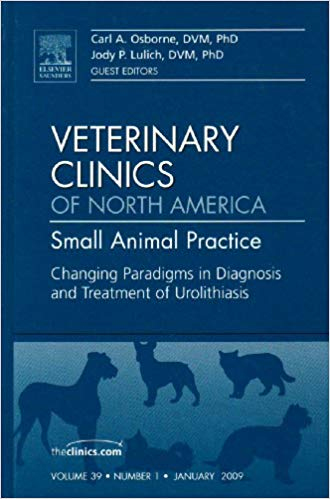
Support this website:
Order from Amazon
We will earn a commission.
Urolithioasis is a surprising common problem in make dogs and cats. An undiagnosed and untreated acute attach involving urethral blockage causes severe pain and can be lethal within dats. Complete obstruction causes uremia within 36–48 hr, which leads to depression, anorexia, vomiting, diarrhea, dehydration, coma, and death within ~72 hr. Urethral obstruction is an emergency condition, and treatment should begin immediately. Familiarity with the problem and its symptoms could save your pet's life. I know, because it saved mine: One of my long-term pets—a cat named Leonard—struggled with urolithiasis most of his life. For many years, it was possible to control the problem with dietary medications. Ultimately, however, he required surgery, which was a success and allowed his to live into a comfortable old age. R. Robbins
RJR Picks from Around the Web (updated 11 MAY 2018 )
Old Science
Weird Science
Treating Disease with Fecal Transplantation
Fossils of miniature humans (hobbits) discovered in Indonesia
Paleontology
Dinosaur tail, complete with feathers, found preserved in amber.
Astronomy
Mysterious fast radio burst (FRB) detected in the distant universe.
Big Data & Informatics

Big Data: Buzzword or Big Deal?
Hacking the genome: Identifying anonymized human subjects using publicly available data.